Tuesday, 31 January 2023

Cask ownership: A few thoughts...

For several years now, I've had questions from friends, colleagues, friends of friends etc.. about cask ownership. Every time, I give my thoughts and tell myself "I really should write a blog article about this", and then never do...

So finally, it's time to put all those thoughts into an article, which hopefully provides some points to think about when considering cask ownership. First though, a few admissions in the interests of transparency:
  • I own (and have owned) casks
  • I have bottled (and will bottle) my casks
  • I have a lot of whisky friends who bottle casks - some for fun, some as a business, and some in-between
  • I'll soon be doing a few (2-3) sponsored posts on the blog and socials (FB, IG) with a cask company - one of the very few cask companies (I can count them on one hand) that I actually trust

To begin, let's take it back to a few basics for those who may be completely new to the world of casks...


"What's all this about casks then?"
In simplest terms, "cask" refers to the wooden vessel in which many aged spirits (including all whiskies) are matured or aged. They come in different shapes, sizes, and have names like "Butts", "Hogsheads", "Barrels", "Octaves" etc.. but they're (almost) always made of Oak, and for the purposes of this article we'll refer to them generically as "casks".

Back in the 1980s, when non-aged spirits like Vodka were gaining in popularity, whisky - Scotch especially - took a backseat and the world experienced a Scotch whisky glut, referred to by some as a "Whisky Loch" (some of the distilleries which closed during this time are now amongst the world's most sought-after). To survive, several distilleries sold casks - to clubs, private individuals, and especially Independent Bottlers (of course some bottlers, like G&M had already been buying spirit and maturing their own casks for nearly 100 years by this stage).


Fast forward 25-30 years, and whisky started to gain in popularity in a big way. The Whisky Loch was no more and we started to experience the opposite - a shortage (especially of aged whisky), and inevitably rising prices. Despite this, at the time and even later (circa 2010-2015), there were still some excellent value casks around, and many distilleries still selling direct to the public. Nowadays there are only a handful doing so, and almost all of them are relatively young / new distilleries.

Fast forward a few more years, whisky continued to grow in popularity (especially during the pandemic - go figure) and unsurprisingly, amidst shortages and rising prices, the "cask investment" brigade emerged - companies taking advantage of the fervour around whisky, promising incredible financial returns in a short period of time.

(Out of sheer curiosity and to help guide some friends, I sat in on two presentations from one of these companies in 2021 & 2022. I won't name names, but my goodness - what I heard was enough to have me running for the hills. I'm not exaggerating when I say almost their entire business model could be summarised as "Buy this cask today, because in X months you can sell it to someone in Mainland China for a double-digit % profit". Never mind the fact that the company couldn't answer basic questions about cask ownership, and that the casks weren't from particularly good distilleries, weren't available for tasting, and/or were in my view horrendously over-priced...)


"I see ads all over social media offering me casks. Is this my ticket to an early retirement or a quick buck?"
Unlikely. Sure, people claim to have made very handsome short-term returns buying and selling casks in the past, but many (myself included) feel that ship has somewhat sailed, at least in terms of Scotch whisky. You may have a "whisky investment expert" quote you some incredible returns in the space of months, but is someone really going to pay 30-50% more than you paid for your cask of Glen Tartan (or other average distillery) in a short space of time? It's far from guaranteed.

Also, keep in mind it’s either impossible or very, very expensive to get a cask from a sought-after distillery like Macallan or Springbank these days (we’re talking hundreds of thousands, often millions of pounds / dollars for a well-matured cask, and forget getting a brand new fill - when it comes to private individuals, only the distillery’s very very best clients get that privilege, if at all).


"So what should I consider about cask ownership?"
First, think about your reason for cask ownership. Are you looking to make a quick buck (which, as above, isn't as easy as it sounds), long-term investment (which carries its own risks outlined below), or are you wanting to eventually bottle the whisky (and if so, to sell, gift or drink)?

Then think about why a cask is for sale in the first place. We've already established that whisky is popular these days, and that most distilleries aren't selling their casks (or at least, not on the open market) anymore. So when you see an aged cask for sale, think "why"? Is it a good cask? Maybe (certainly there are some AMAZING independently bottled casks out there), but think about it from a distiller’s perspective - are they going to sell their best casks? Probably not. They will however sometimes sell casks that don’t fit their flavour profile - which isn’t necessarily a bad thing and has produced some legendary bottles in the past. 

Or maybe it's a cask that's been traded several times, and is floating around the market. Why? Again, that's not automatically a problem, but it is something to ask / consider. 

If you can taste a recent sample, that can help allay concerns about the quality. Keep in mind whisky casks are unique. Two casks maturing side by side, filled on the same day, in the same type of wood, can taste completely different. One might be amazing, one might be terrible. If you’re not getting samples before buying, you have no guarantee if you’ll end up with an amazingly balanced whisky, or 200L+ of tannic sulphured oak juice.


Then let’s say your cask is good, AND you choose to bottle it at the right time (remember not every cask will make it to 25, 30, 40+ years old - some will be terrible at an older age, some won’t even be whisky if the ABV drops too low)! Then you have 200, 350, 450L of whisky...that’s a lot of bottles. You then have to pay for the glass bottles, label design, labelling, taxes, packaging, and storage / shipping. Certainly some (better) cask companies help with all this, but it can be an expensive exercise. Note this isn't a reason not to buy a cask, but it is something a lot of people don't consider.

(Some distilleries, like Sydney's Archie Rose offer "turn-key" cask ownership, where you pay one up-front fee and eventually end up with labelled, duty-paid, delivered bottles. I've done this, and can recommend it as a hugely fun exercise, but of course you pay more up-front for the privilege.)

OK, so you've bottled your cask. Then what do you do with 200, 300, 400+ bottles of your whisky? If you're looking to share it with friends, gift it, or just drink it yourself - great! If you're hoping to sell it though, that’s a lot of whisky to sell in a crowded market. What if it’s just average? Or not even good? It's probably not from a top-tier distillery, so that leaves the less popular distilleries, which is fine, but again, not easy to sell hundreds of bottles unless you’re an established bottler or bar with a following already. Certainly some well-respected bars, shops and whisky clubs can sell bottles in minutes, even from "lesser" distilleries, but who wants to buy an unknown bottle from Joe Smith? 


Also consider the outturn - you may expect to get 300 bottles, but may only end up with 220. That suddenly raises the cost of each bottle significantly. Evaporation can vary wildly from cask to cask, and can hit in a short space of time (and that’s before we consider leakage).

This is all assuming you bottle it. If you’re just looking to sell the cask to someone, it removes some of these headaches, but will someone buy it? For the price and in the timeframe you expect? Maybe, but it's not always guaranteed. 

(There's also a whole minefield around cask ownership which I won't go into in detail, but suffice to say, if you're buying a cask, make sure you're getting the appropriate paperwork to confirm that you indeed own the cask. A "Certificate of Title" or similar may not be enough, and may leave you exposed in the event that your cask broker / "investment company" goes out of business.)


"Any final thoughts?"
Don’t get me wrong, cask ownership can be a tonne of fun, but you have to ask what your goal is up-front, and consider the above points (and many others - this article is far from comprehensive).

If you're planning to buy a cask or two as a long-term investment, cool good luck - but consider the above points first.

If you're planning to pump all your savings into casks and hope to double it within the space of a year...maybe reset your expectations.

If you’re buying a cask to share with friends or colleagues, or as part of a group, and your goal is to have some of your own whisky at the end, or perhaps gift it, go for it! That's my plan with my casks, and it's a lot of fun. 


Cheers,
Martin.

Please note - this article in no way constitutes or should be taken as financial advice. It simply contains my personal views on cask ownership (whether for the purposes of bottling or otherwise). As always, do your own research and come to your own conclusions.

Thursday, 26 January 2023

Glenmorangie "A Tale of the Forest" [Tasted #615]

Glenmorangie, much like their LVMH counterpart Ardbeg, have become known for releasing annual special editions that actually have a point of difference to them, rather than just a different label and slightly different mixture of ex-sherry and ex-Bourbon whiskies. For years it was the Private Edition series (EalantaSpiosBacaltaMilseanCompanta etc..) and more recently the "Tale of" series - first "A Tale of Cake", then "A Tale of Winter" and now "A Tale of the Forest".


A Tale of the Forest uses barley kilned with "woodland botanicals" - more specifically juniper berries, birch bark, heather flowers and just a hint of peat. I'm sure I'm not the only one who read this and thought "a gin-esque whisky!?"

My biggest question when it comes to interesting, unusually-made whiskies like this is - does the uniqueness actually shine through in the final product? Can you actually taste those woodland botanicals in the whisky? Let's find out...


Glenmorangie "A Tale of the Forest" (46% ABV, NAS, Highlands, $980HKD / $169.99AUD / £62.46ex-VAT)
----------------------------------------------------------------
-----------------------------------------------------------------------------------------------------
Colour: Honey gold

Nose: There really is an initial whack of pine needles and a touch of eucalyptus here. It's certainly an unusual nose for a Scotch. Freshly-cut grass, heather and herbal tea. If you'd told me it was a cask-rested gin, based on the nose, I'd believe you. 

Palate: A bit of the spice from the nose carries through, along with the pine notes. The eucalyptus too, but it's more prominent than on the nose. There's still Glenmo DNA though - soft yet flavoursome with noticeable citrus, vanilla cream & honey. Doesn't feel overly young either - there's not a lot of complexity here, but it's also not rough or under-aged.

Finish: Long, with residual resin, pine and grassy notes.

Rating (on my very non-scientific scale): 90/100 (Martin). This isn't a hugely complex whisky, but it 100% matches the name and purported character, and it's tasty too. Some distilleries use special release NAS whiskies to hide young whisky that (in my view) isn't quite ready. That's not the case here at all - this feels spot-on in terms of age and "meets the brief" in terms of character.


Thanks to MHDHK for the review bottle.

Cheers,
Martin.

Wednesday, 28 December 2022

Malt Whisky Yearbook 2023 review

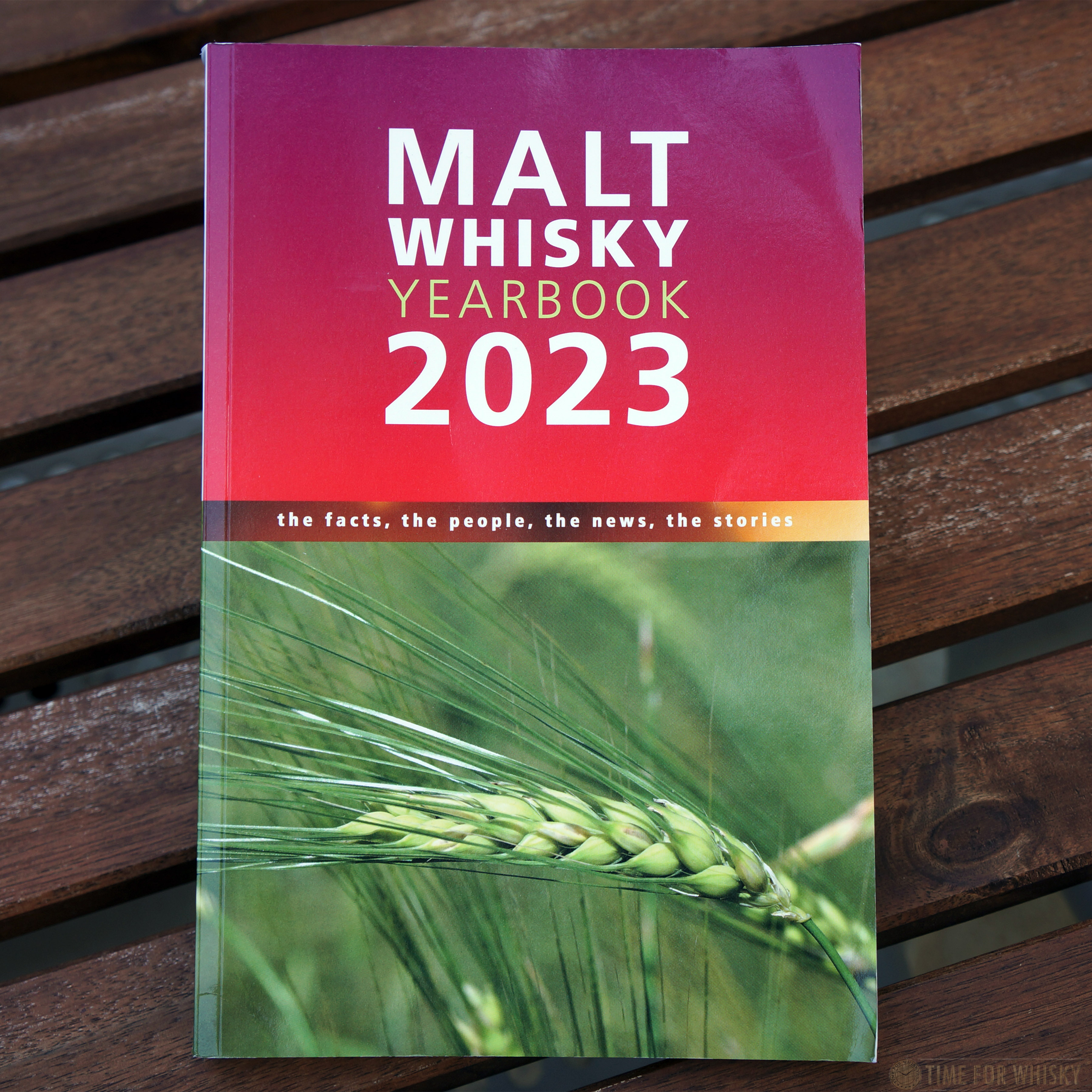
There are a huge (and growing) number of whisky books in the market, some of them good, some of them not so good. Personally though, there's only one annual book I always ensure I have in my collection on its release - Ingvar Ronde's Malt Whisky Yearbook, now in its 16th year with the recently-released 2023 Edition.


Since my first copy in 2008, I've found it to be the the quintessential source of whisky knowledge - easy to read, accurate, current, with a good mix of distillery profiles/histories and thought pieces written by some of the industry's best writers. This year's release for example includes articles like "The SWA - Rottweiler or St Barnard?", "The Complexities Of Whisky Sustainability" & "Lowlands on a High" (about the rejuvenation of this once-unloved region).


What makes Ronde's Malt Whisky Yearbook the one I always keep within easy reach however is the reference material. Whether it's distilleries, Independent Bottlers, whisky shops, "distilleries by owner", closed distilleries or distilleries by country, there's a huge amount of information laid out in an easy to find format. Did you know for example China has 4 active whisky distilleries? Can you list every single distillery under Diageo's ownership? Do you know the output capacity of Holyrood Distillery? All this sort of information is available within seconds - very handy for a whisky blogger, or anyone with more than a passing interest in whisky.


This year the book again includes "Websites to Watch" (page 73) - and again we're humbled to be listed alongside a number of fantastic sites.

At £15.95 (with shipping to Hong Kong only £3.95), Malt Whisky Yearbook continues to be excellent value, and in my opinion well worth picking up if you haven’t read it before, and a must-buy if you have! Available from www.maltwhiskyyearbook.com.


Cheers,
Martin.

This copy of the Malt Whisky Yearbook was kindly provided by Ingvar Ronde, however the views above are entirely my own and would remain unchanged had I purchased the book myself.


Tuesday, 27 December 2022

The Whisky Exchange Ben Nevis 1992-2020 23 Year Old Cask #1709 [Tasted #614]

Given my love of Ben Nevis (and how often I post / talk about them on Instagram), I really should post a few more tasting notes on this blog. So in an attempt to pad out the Nevis quota before the end of the year, here's a Whisky Exchange bottling kindly donated by a Hong Kong whisky mate, the talented Damoo from The Whisky Journey (IG / FB).

Distilled in 1996 (of course), this one was bottled from a single Hogshead in 2020 at 23yo & 52.1% ABV. The Whisky Exchange have a number of whisky ranges through their Elixir Distillers company, but I've always had good ones from this label, so it came high expectations...


Ben Nevis 1996 - 2020 Cask #1709 bottled by The Whisky Exchange (52.1% ABV, 23yo, One of 205 bottles, Highlands, no longer available)
----------------------------------------------------------------
-----------------------------------------------------------------------------------------------------
Colour: Yellow straw

Nose: Lemon tart and butter menthols, followed by peach, pear and stewed apple.

Palate: Follows the nose, with an initial fruitiness, but more pear, heather, and a very slight grassy funk. I wouldn't call it tropical (though there is a little candied grapefruit) - more honey and stone fruits, but it's a wonderfully delicious dram.

Finish: Long, with heather, honey and orange slices.

Rating (on my very non-scientific scale): 92/100 (Martin). Up there with the better 1996s.


Cheers,
Martin.

Thursday, 1 December 2022

Indri Single Malt Indian Whisky - Trini [Tasted #613]

In the 3rd century BC - trade between India and other parts of the world was blooming. At that time, Chandragupta Maurya, the founder of the ancient Indian Empire build a trade route that would connect Central Asia (all the way to Greece) to important trade centres in India. Many years later, the British Empire considerably rebuilt the road between 1833 and 1860 and aptly named this route the Grant Trunk Road or now also referred to as GT Road. 

Over the centuries, the GT road acted as one of the major trade routes in the region and the road is still very much used in the present-day Indian subcontinent for transportation. This route has been the gateway to the Indian sub-continent and has seen Traders, Merchants, Armies come and go, making it a prime region of cultural confluence. 


So what's this got to do with whisky you ask? Fast forward to 1995 and a distillery was built just off this iconic trade route. Piccadily, an Indian hospitality and entertainment group built a sugar mill and distillery off the GT road, in a small village known as Indri in the Haryana region. What would not be known at the time was that Indri would eventually feature on the global scale as one of India's award-winning whiskies. Since then, Piccadily has become the largest independent manufacturer and seller of malt spirits in India. 

The Haryana region is naturally abundant in water and it's also known as the 'Green Bowl of India.' Landlocked between mountain peaks that form part of the Himalayas range, the region, its surroundings and history would soon form part of the Indri single malt whisky story. 

The distillery in Indri, Haryana has six copper pot stills, three being wash stills and the other three being spirit stills. The production capacity is rated at around 4 million litres annually. The preparation of American imported oak barrels is also done on-site by the coopers at the distillery who would toast, char and repair the barrels on-site.

The development of the Indri single malt whisky has primarily been driven by Master Blender, Surrinder Kumar who has been developing malts from the distillery since 2004. The Indri Single Malt Whisky, in particular, has won numerous awards and also took gold at this year's International Spirits Challenge (ISC) overtaking the likes of Paul John and Rampur Whiskies. The former, I still love to this day; I fondly remember my first time, tasting the Paul John Oloroso when it first launched.

So what do I think of the Indri Single Malt Whisky, here are my thoughts.


Indri Single Malt Whisky - Trini; The Three Wood (46% ABV, NAS, Indri, Haryana, India, A$79.99 

------------------------------------------------------------------------------------------------------------------------

While there is an inherent oakiness throughout, the layers of flavours on the nose and the palate make this a particularly interesting whisky. It is fruity, and light and can be had with or without a drop of water.

Nose: Summer fruits, loads of raspberries and blackberries, pineapple lollies and a dollop of creamy vanilla ice cream layered with a drizzle of honey.

Palate: Light, to begin with, the berry notes come through initially before a layer of gentle spice that follows. There is an undertone of oakiness that is carried throughout. The spices are mixed with citrus notes, orange zest, and some white pepper. 

Finish: The finish is medium and there are the tannin and the oak notes that remain along with some sour pineapple juice that lingers.

Rating: 91/100 (Hendy) 


Thanks to Madhu Kanna of Piccadily for sending us a bottle of Indri Single Malt Whisky to check out. 


Sunday, 27 November 2022

Westward Dominio IV Pinot Noir, Tempranillo [Tasted #611 - #612]

Shape tasting? What is shape tasting? It's the term coined by Dominio IV's founder, Patric Reuter, to describe the pictorial representation of the aromas and flavours that unfold in time with his wines. 

Dominio IV wines, based in Mosier, Oregon is known for its syrah, tempranillo and pinot noir. Dominio IV winery is also where the method of "shape testing" was developed by Patrick Reuter. Visual presentation of tasting notes of the flavours and aromas can be seen on the labels of the Dominio IV Imagination Wine Series.

Inspired by both, the wines of Dominio IV and the visual representation of the profile of those wines - Miles Munroe, the Lead Distiller of Westward Distillery developed the Cascadia Creative Series. Dominio IV's innovative shape-tasting method was essential to the development of this new release with Patrick also painting the sensory experience from the whiskey to which his drawings are now featured on the Cascadia Creative Series boxes.

So what forms part of Westward's Cascadia Creative Series? The series will include Westward Whiskey Dominio IV Single Barrel Tempranillo Whiskey as well as a re-release of the Westward Whiskey Dominio IV Single Barrel Pinot Noir Whiskey. Both whiskies will have an ABV of 62.5% and the series has been developed exclusively for the Whisky Club.

We joined Miles Munroe for the launch of the Cascadia Creative Series here in Sydney where Miles talked through the long partnership that he's had with Dominio IV winery that culminated in the development of these expressions.

The last time Miles was down under was back in March 2019 and I got to sit down with him and spent some time getting to know him and his back story prior to joining Westward and what inspired him at Westward. Fast forward to 2022 and Miles has undoubtedly taken Westward to the next level, inspired by all the elements that make Westward what it is.

The Westward Whiskey Dominio IV Tempranillo Single Barrel at cask strength is made from scratch with Westward's original single malt. The distillation begins with a brew of an American Ale, using locally sourced two-row barley, ale yeast and a slow, low-temperature fermentation process. The whiskey is then distilled twice in custom low-reflux post stills before being matured in lightly charred American Oak barrels and finally, transferred at cask strength into an emptied Dominio IV Tempranillo French Oak Wine Casks. The whiskey is finished for an additional year before being bottled.

Head Distiller Miles Munroe noted, “The Dominio IV Tempranillo vineyard on the east of the Cascade Range produces incredibly robust grapes that match the fruit-forward flavours of Westward Whiskey. Because of this, we knew that finishing our Westward Whiskey at cask strength in their Tempranillo barrels would be the ideal flavour pairing and make for an extraordinary first expression to launch the Cascadia Creative Series in Australia."

So what's the Cascadia Creative Series like?

Westward Dominio IV Pinot Noir (62.5% ABV, NAS, Portland, Oregon, United States, A$195

------------------------------------------------------------------------------------------------------------------------

The re-release of the Westward Whiskey Dominio IV Pinot Noir Single Barrel at cask strength comes after an incredible response to the initial release in Australia, which previously sold out through The Whisky Club in January 2021. Another exclusive release at cask-strength, this re-release expression sees the maturation of Westward's original single malt for 19 months in French Oak Pinot Noir Barrels from Dominio IV Wines.

Nose: Fruity, loads of strawberries, orange peels with some coconut shaving, mixed with raisins, some vanillin beans, green apples and a small remnant of nutmeg.

Palate: The palate is reminiscent of a Christmas panettone cake, with raisins and some candied orange. This sweetness is then followed by lots of spices, particularly cinnamon, nutmeg and some light chilli. 

Finish: The finish is long and elegant and transitions from the spice bomb to remnants of tannin, and nougat.

Rating: 92/100 (Hendy) 

Westward Dominio IV Tempranillo (62.5% ABV, NAS, Portland, Oregon, United States, A$195

------------------------------------------------------------------------------------------------------------------------

The Westward Whiskey Dominio IV Tempranillo Single Barrel at cask strength sees the original Westward single malt being finished for 12 months in an emptied French Oak Dominio IV Tempranillo cask.

Nose:  The nose has layers of sticky date and sticky pudding. I can sense some crème de la crème and caramel. The sweetness is then followed with some earthy spices, clove, cinnamon, and perhaps a cinnamon donut. The nose is very dessert-like.

Palate: Those layers of sweetness ripple through the palate with notes of sticky date, burnt caramel, crème brûlée and maple-covered pancake. The spices that follow cut through the sweetness, with loads of clove and notes of cedar oak, 

Finish: The finish is dry, earthy and with some remnants of tobacco.

Rating: 92/100 (Hendy) 

I am quite impressed with both the expressions that make up the Cascadia Creative Series. Personally, I've been a fan of Westward's core single malt and seeing the culmination of the core single malt with the casks of various wine varietals has elevated the profile of their core single malt.

Thanks to Westward Whiskies and Agent 99 for having us as part of the Whisky Club preview event.

Cheers
Hendy

Monday, 21 November 2022

Tasting the BlockBar x BenRiach 40 Year Old NFT Whisky [Tasted #610]

Hot on the heels of Hendy's recent "Brown Forman Whisky Showcase" post comes another Brown Forman single malt, although released in a very different manner...

I ran a poll on Instagram Stories back in January about NFT spirit sales, and unsurprisingly, there was a lot of distrust / disinterest. I'd write out my 2c on the matter here, but I think I covered it pretty well back then:


In summary, whilst there's a heap of BS NFT projects out there with little to no utility (and in my view, value, as the Crypto world is now realising), this isn't one of them...and the fact that so many well-established brands have partnered with BlockBar in such a short space of time (they just had their first birthday) says a lot.

One of those more recent brands is Benriach, who recently released their first NFT recently in the form of the Benriach 40yo Twin Set NFT, available in a limited "drop" of 10 sets only, exclusively via BlockBar.


A 1 of 10 release of a 40yo whisky is a pretty impressive thing to begin with, but not content to stop there, Benriach and BlockBar actually made this a set of two different 40yos. Both 40yo Benriach, but very different whiskies:
  •  "The Forty" - a peated Benriach matured in ex-Bourbon and ex-Port casks, bottled at 43.5%; and
  • "The Forty Octave Cask Matured" - a "classic Speyside" Benriach, matured in Octave casks and bottled at 51.5%
Benriach & BlockBar were kind enough to send me a sample of the former recently, so we could actually taste the liquid behind the NFT...


Benriach "The Forty" 40yo BlockBar NFT release (43.5% ABV, 40yo, One of 10 bottles, Speyside, ~6.78ETH / $8,000USD in a twinset)
----------------------------------------------------------------
-----------------------------------------------------------------------------------------------------
Colour: Deep coffee copper

Nose: Old dunnage warehouse, dusty old school (desirable) old sherry casks, but with a vibrant fruitiness too - some blackcurrant, red apple and even some marzipan.

Palate: Follows the nose, with marzipan, then red apple. Theres oak, but it's balanced. I don't get any noticeable peat, but after 40 years (and presumably not an extreme level of PPM to begin with) that's to be expected. There's some humidor notes and coffee beans, a little walnut tannin towards the end, with some oolong tea and rich red berries.

Finish: Long, strong earl grey tea notes with residual oak tannins.

Rating (on my very non-scientific scale): 92/100 (Martin). A lovely dram.


Thanks to BlockBar, BenRiach / Brown Forman & GustoLuxe for the sample of "The Forty" Benriach, available via BlockBar now.

Cheers,
Martin.

Monday, 14 November 2022

Brown-Forman Whisky Showcase ft. GlenDronach 28yo (Batch 19) and Glenglassaugh 47yo [Tasted #608 - 609]

With an extensive portfolio of whiskies, how does one select a handful to showcase and highlight the different characters that may represent the portfolio.

That was the challenge taken on by Andy Tsai (Brown-Forman NSW/ACT Brand Ambassador), Grant Shearon (Brown-Forman Advocacy and Development Manager) and Stuart Reeves (Brown Forman Brand Manager) at the recent Brown Forman showcase event. 

The brief was simple, select 3 Benriach whiskies and 3 GlenDronach whiskies out of the extensive Benriach and GlenDronach portfolio to highlight the best of the rest. If that wasn't enough, the team also brought out a Glenglassaugh 47yo to accompany the set of Benriach and GlenDronach whiskies.

So what got selected and presented? These were the six whiskies that were featured:

  • Benriach Malting Season Batch 2
  • Benriach The Twelve
  • Benriach The Twenty One
  • GlenDronach 15yo "The Revival"
  • GlenDronach 18yo "The Allardice"
  • GlenDronach 28yo Batch 19 - Cask #6871

The Benriach Malting Season Batch 2 was the first one we first tasted. The Malting Season expression is the first expression to be produced entirely using barley malted from Benriach's Speyside distillery's historic floor maltings. The first edition of Benriach Malting Season is two-cask matured in bourbon and virgin oak barrels to bring out the wholesome, creamy flavour. There are notes of barley sugar, almond fudge and poached apple with smooth flavours of vanilla and honeyed pear, with nuttiness on the finish.

My favourite Benriach from the core series, the Benriach The Twelve was our second malt. The Twelve is a rich and smooth expression of Benriach Single Malt. Matured in a sherry-rich profile and combined with the addition of bourbon and port casks. Everything from rich honey, chocolate, baked black forest and some lingering oak spice. There is some citrus, sultana and spices on the finish. Very delicious.

The Benriach The Twenty One was the third expression we tasted. The unique aspect of the Twenty One is that this expression is known for its long maturation and the use of the four-cask maturation process. According to Dr Rachel Barrie, it is somewhat of a delicate process that requires patience and also combines unpeated and peated styles. The characters of aged bourbon, sherry, virgin oak and red wine casks are combined into this expression. It is very elegant. There is subtle inland peat, and some smoked bacon, together with honey, glazed cherry, baked orange, hazelnut and elegant spices.

The GlenDronach 15yo Revival Whisky has been refreshed recently and it is matured in PX and Oloroso sherry casks from Andalucía. The GlenDronach Revival has been a core feature of the GlenDronach series and there are notes of dark fruits, raisins, rich chocolate and manuka honey. It's almost like drinking Christmas in a glass. Delicious and by far remains my favourite GlenDronach go-to expression.

The 18yo brethren of the Revival is The GlenDronach 18yo Allardice. Matured in fine Oloroso sherry casks from Andalucía, Spain, the 18yo is similarly rich sherried Highland malt whisky with notes of dark treacle, allspice and walnut carrying and with a long, lingering finish. Many consider this expression as the ultimate sherry bomb.

The GlenDronach Cask Bottling Batch 19 - Cask #6871 (53% ABV, 28yo, Highlands, Scotland, A$1,100

------------------------------------------------------------------------------------------------------------------------

If the Revival is considered Christmas in a glass, this GlenDronach cask series would be the main event. 

Nose: A whiff of raisins followed by some Christmas pudding alongside caramel tarts with some milk chocolate shavings. There are also notes of creme brulee and treacle syrup

Palate: Salted caramel with particular saltiness that comes through. The palate is viscous, layered with milk chocolate, and raisins before transitioning to spices; nutmeg, cinnamon and ground coffee

Finish: medium lingering with spices, in particular cinnamon

Rating: 93/100 (Hendy) 

Glenglassaugh 1972 vintage 47yo, cask #3802 (44.4% ABV, 47yo, Speyside, Scotland, A$7,750

------------------------------------------------------------------------------------------------------------------------

The Glenglassaugh cask #3802 is a PX cask. Filled to cask in 1972 and bottled at 47yo, this Glenglassaugh 47yo is non-chill filtered and matured in coastal warehouses on the shores of Sandend Bay, it has notes of passionfruit and buttercream, kissed by the sea.

Nose: The passionfruit is prominent, with lots of passionfruit lollies, tropical fruits, some raisins, blackberries,  and vanilla. It's like a fruit salad mixed with berries. 

Palate: The passionfruit continues to dominate the palate followed by citrus notes before settling into sweet berries. The tannin is quite prominent before a spiced finish, white pepper. 

Finish: The finish is dry and there is a lingering oak note. 

Rating: 92/100 (Hendy)

The Brown Forman showcase event was a remarkable walkthrough of what Brown Forman has to offer. Everything from your classic Benriach Twelve to those bottlings from GlenDronach that would appease those around the Christmas table with its prominent rich, Christmas notes.

Thanks to Adrian of 'different' and Stuart Reeves from Brown Forman for extending the Brown Forman showcase event to us.

Cheers,
Hendy.

Sunday, 30 October 2022

Dead Reckoning Rum: Independently bottled rum from around the World [Tasted #605 - 607]

We don't feature a lot of malternatives on the blog, but when we do, we prefer them to follow the same types of whiskies we typically like to drink - i.e. cask or higher strength, single cask, and/or independently bottled. So when Justin Boseley of Dead Reckoning Rum (IG) reached out recently, it only took a quick Google to learn this was the sort of malternative that ticks the TimeforWhisky boxes...

Justin runs La Rumbla Imports, a premium spirit store based in South Australia focusing on (you guessed it) rum, but also runs his own independent rum brand Dead Reckoning Rum, described as "An Australian Independent label specialising in master-mixed rum blends, single casks and some rare, forgotten ‘barn-finds’ of the Rum world".

Justin was kind enough to send through three samples of recent and upcoming releases, specifically:
  • Dead Reckoning Rum Mutiny - South Pacific Cask Strength 21 Year Old (65%)
  • Dead Reckoning Rum South Pacific Muscat Cask 10 Year Old (47%); and
  • Dead Reckoning Rum Mhoba - South Africa 2 Years 5 Months Old ex-Red Wine Cask (56%)


Being a relative newbie to rum, I hadn't heard of South Pacific Distillery, but a little Googling led me to learn it's from Fiji, owned by Coca-Cola, and has been bottled by other independent bottlers (Samaroli, Kill Devil etc..) previously. Whilst the distillery does release some of own bottlings at the younger end of the spectrum, it seems they didn't quite know what to do with some of the older stock they had on-hand, which is how Justin came to bottle the 21 Year Old featured here (due for release in November in Australia, $200AUD RRP).


Dead Reckoning Rum Mutiny - South Pacific Cask Strength 21 Year Old (65% ABV, 21yo, 100% tropical aged, 85-90% angels' share, 285 bottles, Fiji, $200AUD)
---------------------------------------------------------------------------------------------------------------------------------------------------------------------
Colour: Deep burnished copper.

Nose: Grass-laden earthiness, stewed pears and peaches, along with banana & singed straw, funky, intriguing and inviting.

Palate: Big, mouth-filling Esthers give way to blackberry and blackcurrant notes, intense blackcurrant jubes, 85%+ dark chocolate and coffee beans then some black jelly babies. It’s big, very big, but not at all harsh. LOTS of flavour.

Finish: Long, dark chocolate coated coffee beans.

Rating (on my very non-scientific scale): 90/100 (Martin). At 65% this could've just been an overly hot mess, but it's not at all. It's complex, full of flavour, big, and delicious.


Dead Reckoning Rum South Pacific Muscat Cask 10 Year Old (47% ABV, 10yo, 100% tropical aged, 50% angels' share, 1,240 bottles, Fiji)
----------------------------------------------------------------
-----------------------------------------------------------------------------------------------------
Colour: Copper gold.

Nose: Esthers, grass, and a sweet fruitiness.

Palate: I get toffee at first, followed up by Sultanas and 70% Lindt Chocolate. These are big flavours, but they're refined, and at 47%, eminently drinkable.

Finish: Long, with slight oak tannins and coffee grounds.

Rating (on my very non-scientific scale): 89/100 (Martin). I like this.


Dead Reckoning Rum Mhoba - South Africa 2 Years 5 Months Old ex-Red Wine Cask (56% ABV, 2yrs 5mths old, 21% angels' share, 377 bottles, South Africa, $170AUD)
----------------------------------------------------------------
-----------------------------------------------------------------------------------------------------
Colour: Burnished copper-gold

Nose: Wow, instantly I just get huge amounts of blackcurrant juice, followed by some apple juice. It's intense, it's huge, it's obviously young, but it's packed full of flavour.

Palate: Big esthers, alongside fresh apple juice and juicy blackcurrants. I left the sample bottle half-full for ~2 weeks and after that oxidation, noticed some chocolate milk and caramel chews.

Finish: On the shorter side, with more blackcurrent and grape, hints of chocolate before ending in slight hints of drying oak.

Rating (on my very non-scientific scale): 86/100 (Martin). Super unique, youthful and not overly complex, but definitely a well-made rum - tasty and in no way "harsh".


Thanks to Justin of Dead Reckoning Rum for providing these samples - definitely a brand I'll be keeping my eye on in the future.

Cheers,
Martin.

Friday, 28 October 2022

G&M Private Collection Lochside 1981, St Magdalene 1982 & Glen Mhor 1982 (The Recollection Series) [Tasted #602 - 604]

The 10th anniversary celebrations may be over, but the epic whisky posts certainly aren't. Continuing the "closed distillery" theme of a few of our recent posts are three new releases from Gordon & MacPhail, as part of their new series "The Recollection - Lost works of Art from Scotland's Liquid History".

"The Recollection", a series of "rare single malts to revive and celebrate the character of now closed distilleries" is interesting in that it will span both Private Collection and Connoisseurs Choice ranges, presumably introducing bottles at a range of prices.

G&M were kind enough to send me three samples of "The Recollection" Private Collection releases recently, as a taste of things to come:
(The series has also seen bottlings from Pittyvaich, Inverleven, Convalmore, Imperial & Banff released recently too.)


Gordon & MacPhail Private Collection Lochside 1981 40yo (49.2% ABV, 40yo, Cask #802, One of 141 bottles, Highland, £3199.99/ $4999 USD)
----------------------------------------------------------------
-----------------------------------------------------------------------------------------------------
Initially a brewery, Lochside becan distillation with a Coffey still, followed by four pot stills in 1961. The distillery ran until the early 1990s, was demolished in 2005, and has a distillery character described as "a Highland whisky of medium body and fruit", complementing long-term Sherry maturation. This one in particular was matured in a refill Sherry hogshead.

Colour: Rich dark orange gold

Nose: Whole oranges, grapefruit, with a slightly minty undertone. Wine gums at first, with tropical fruits (subtle mango, coconut) emerging over time.

Palate: Grapefruit and passionfruit, some oak, orange zest and hints of dunnage warehouse and those lovely old sherry casks of years gone by. There's a slight nuttiness and a little of the mint from the nose too.

Finish: Slightly drying and herbal (herbal tea), with just a hint of tannin at the very end.

Rating (on my very non-scientific scale): 92/100 (Martin). Properly delicious, well-made and expertly-matured whisky.


Gordon & MacPhail Private Collection St Magdalene 1982 39yo (54.8% ABV, 39yo, Cask #2094, One of 165 bottles, Lowland, £2249.99 / $3499 USD)
---------------------------------------------------------------------
----------------------------------------------------------------------------------------
St Magdalene (often called "Linlithgow") was built in the mid-18th century, and operated through to 1983 when it was closed. The distillery has since been renovated into residential flats, though the malting barn and kiln remain. The whisky offers a "light style of spirit with citrus and herbal influences". In this case, maturation was in a refill American hogshead.

Colour: Golden sunset

Nose: Herbal and spiced at first. After some time, milk chocolate emerges, along with lemon zest, white pepper (just a little), and some lime and grapefruit notes.

Palate: Apricot and peach, floral notes, milk chocolate, passionfruit, oak, vanilla ice cream drizzled with honey, and sweet milk tea.

Finish: Long, chocolate-coated pineapple alongside toasted oak.

Rating (on my very non-scientific scale): 91/100 (Martin). I don't generally reach for Lowland whiskies, but this one is lovely.


Gordon & MacPhail Private Collection Glen Mhor 1982 40yo (50.8% ABV, 40yo, Cask #72, One of 174 bottles, Highland, £2249.99 / $3499 USD)
------------------------------------------------------------------------
-------------------------------------------------------------------------------------
Built in 1892 & demolished in 1986, the whiskies of Glen Mhor are said to have a well-rounded spirit style which works well with G&M's bespoke Sherry casks (in this case, a refill sherry hoghsead).

Colour: Copper-gold.

Nose: Dark chocolate nuttiness. It's sherried, but the sherry's not in your face. There's also some nutella, herbal tea and maraschino cherries.

Palate: The chocolate from the nose carries through, as does the nuttiness. Then there are some stone fruits, oat cakes, dried tobacco leaves, varnish and manuka honey. A delicious variety.

Finish: Long, with earth-laden chocolate notes.

Rating (on my very non-scientific scale): 92/100 (Martin). Another delight.


All bottles will be available worldwide through usual G&M channels. Thanks to G&M and WSW for the samples.

Cheers,
Martin.

Tuesday, 25 October 2022

Tasted #601: Bushmills 2012 Burgundy Cask

One less commonly known thing is that whiskey distilling started in Ireland. Another fact is that the Bushmills Whiskey Distillery was granted a license to distill in 1608, making it one of the oldest distilleries in the world and certainly in Bushmills, Ireland. Though the town's first distillery didn't appear until 1784, there had been an improvement over the next century.

Triple pot distillation though did not start until the 1930s, following the appointment of Scotsman Jimmy Morrison as a manager to improve the make. Jimmy's triple type of pot still [distillation] was not in use anywhere else. He had come to Bushmills from Mortlach, which may raise the question of similarities? Between the 1930s and the 1970s, the distillery only produced peated whiskey. Fast forward to today, Bushmills makes light, grassy, triple-distilled malt and its original blends. 

So what do you get when you combine the triple distilled malt from one of the oldest distilleries with an approach that sees the use of historically significant casks to finish the malt? How about a rather pleasant and delicious triple-distilled whiskey. This was such when we tasted the Bushmills Burgundy Cask; a release that forms part of a special series created exclusively for The Whisky Club.

Bushmills have produced a three-part exclusive series for the Whisky Club, with the first series, released in 2020 being a 2006 vintage Marsala Cask aka Italian Sherry. The second series followed a 2011 vintage Banyuls Cask, a French Port matured Bushmills.

The Bushmills Burgundy Cask is the third and final release in the Bushmills Causeway Collection 2012. What's unique is that the Burgundy casks have been sourced from Domaine des Hospices, a winery dating back to the 1400s. The Burgundy Cask will also be the first release with Bushmill's new Master Blender Alex Thomas. She has described the release as "one of the best whiskeys that Bushmills have produced to date"

Distilled in 2012, the spirit was first laid down in Bushmills’ trademark Oloroso Sherry and Bourbon casks before being further matured for three-and-a-half-year in Burgundy red wine casks. Bottled this year, this non-chill filtered and non-coloured release has been bottled at cask strength; 51.8% ABV.


The Bushmills 2012 Burgundy Cask - The Causeway Collection (51.8% ABV, 10yo, Antrim, Ireland, A$135 (via The Whisky Club) 

------------------------------------------------------------------------------------------------------------------------

Nose: The nose is fresh, sweet, and vanilla-laden. There are dried fruits mixed with strawberry jam and some custard apples. 

Palate: The palate builds on the sweetness from the nose with red velvet cake followed by a vanilla and strawberry jam sponge cake. The palate is rich and slowly evolves into notes of spiced toffee apple cake and sticky date pudding

Finish: The finish is long and smooth with spices and tannin remaining for a while longer

Rating: 93/100 (Hendy)

Thanks to Eilis Grainger of Mango Communications and The Whisky Club for providing us with a sample of this Bushmills Burgundy Cask release.

Cheers,
Hendy.

Saturday, 22 October 2022

Tasted #600: Springbank 50yo 1919 (TimeforWhisky 10 Year Anniversary Dram)

Well here we are...10 years to the day since TimeforWhisky.com's very first post! Over 630 articles, 600 Tasting notes, and more amazing experiences than I ever thought possible....and still going strong!

Coinciding with this momentous occasion, Tasted Post #600 had to be something special (after all, the past 100's included a 65yo Lalique Macallan50yo OB Balvenie & 60yo Glenfarclas). Any of the previous 9 "10th Anniversary" whiskies would have been sufficient...but hey, milestones like this don't come along all that often - this whisky had to be something really special.

...and to that end, I present the Springbank 50 Year Old 1919. Filled into cask on 29th Dec 1919 (just 13 months after the end of WW1), and bottled on 25th Nov 1970, this whisky slumbered away in oak throughout the entire World War II, the moon landing, the Vietnam War, the first nuclear explosion...I could go on.

It's pretty incredible to try any 50 Year Old whisky, but to think this was distilled almost 100 years before I tried it....astounding.


As with several of the "10th Anniversary" whiskies over the past 10 days, this whisky was tasted thanks to the generosity of a fellow whisky lover (@whisky_is_better_aged again), at Hong Kong's WhiskyNow 2019. I'd just tried a different Springbank 50 Year Old (Millennium Collection, pictured below) when @whisky_is_better_aged mentioned he had something special under the table, and gestured for my glass.

When this 1919 Springbank was pulled out, I realised "something special" was an a bit of an understatement...


The bottle itself doesn't mention the year of distillation, but Emmanuel Dron's excellent "Collecting Scotch Whisky" tome has the accompanying letters which came with the bottle in 1970, detailing the key dates and figures. Of particular note is this whisky was bottled at 66.3 proof, or roughly 37.8% ABV - i.e. by today's standards, it couldn't legally be called Scotch whisky!

A distillery re-bottling of this sold for an incredible £183,500 less than a year ago, and though this original "Pear Shaped" Springbank 50 Year Old hasn't quite achieved such lofty prices, it's certainly incredible rare and valuable.


Springbank 50 Year Old 1919 Pear Shaped Bottle (66.3 proof (~37.8% ABV), 50yo, Campbeltown, Scotland)
-------------------------------------------------------------------------------------------------------------------------------------------------
Colour: Dull orange-gold.

Nose: Ok, well this is unlike any whisky I've nosed before. There's a dustiness, some earth-laden smoke, a herbal oiliness and some Vicks lozenges. It's...a spirit. I wouldn't immediately necessarily say whisky. It's complex, and lovely to nose, it's just...very unusual!

Palate: 
Dusty lemon tart with a freshly baked crust is my initial impression, followed by drying oak with a slight oiliness. Black jelly babies, a certain "barnyardiness" and camfourwood follow, before the dusty, earthy smoke of the nose re-appears. A mixed bag of flavours!

Finish:
Short to medium in length, with overripe lemons, residual oak and a lingering forrest floor earthiness.

Rating (on my very non-scientific scale): 90/100. Subtle, understated, yet equally complex and baffling. On the whole though, an enjoyable whisky and an immensely satisfying experience.


Not the 1919...but another Springbank 50 Year Old (Millennium Collection) tasted on the same day.
(Yes, it was a good day...)


Well there we have it, 600 Tasting notes and 10 years. Hendy and I look forward to bringing you the next decade of eventstasting Notes and whisky news...and who knows maybe one day we'll even update this ancient website!

Thanks for reading / following - it really means a lot.

Cheers,
Martin.