Showing posts with label blends. Show all posts

Tuesday, 20 June 2023

House of Hazelwood - Whisky from the Gordon Family private collection [Tasted #639 - 642]

As I think I've mentioned a few times on this blog, Glenfiddich is the whisky that got me into whisky (an abnormally large percentage of my posts from 2012 were about the distillery), and a whisky for which I've always had a soft spot. Over time that extended to sister distilleries Balvenie & Kininvie, so it's fair to say I'm a fan of what parent (and still family-owned) company William Grant & Sons produce. 

It shouldn't be a surprise then that when I was asked if I wanted to try some well-aged releases from House of Hazelwood, the latest venture from the Gordon Family (owners of WG&S), a very emphatic yes quickly followed.

Depending on when you began your whisky journey, "Hazelwood" could mean a few different things - a limited series of releases dating back to 2001 (with the first released only to WG&S employees, and the second being the first official bottling of Kininvie single malt), or a 2016 series of blended releases found largely in duty free, bottled in 500mL format as an 18, 21 and 25 year old.

It's the Hazelwood brand's most recent incarnation we're here to discuss though, and arguably its most exciting. To learn more, I sat down with Director Jonathan Gibson for a virtual tasting recently.


Jonathan explained that Charles Gordon (great-grandson of William Grant, father of the current WG&S Chairman & influential character in the company's history) began collecting casks not for commercial release, but for the family's personal stocks decades ago, and built the collection to the point that it simply became "too large". No doubt buoyed by whisky's immense rising popularity, the family decided it was time to bottle and sell these, and hence the House of Hazelwood collection was born, with a plan to release 8 new whiskies every 6-9 months.
 
(A point I found interesting is that the casks that go into the House of Hazelwood collection don't contain old Glenfiddich, Balvenie or Kininvie. The distilleries are diverse and varied, and the majority of the whiskies are blended, blended malt or blended grain whiskies.)
 

I asked Jonathan (who himself came from Compass Box) about the cask management - he explained some are actively managed, and others are left alone. Some are blended at birth (like the aptly titled "Blended at Birth"!) and others blended later in life.

The company (under the WG&S umbrella, but run as a separate company to the distilleries) launched in June 2022, and has recently officially launched in Australia, largely following a model of selling direct to consumers. With some luck Hong Kong distribution won't be too far behind.

Having covered the background, it was time to dive into a tasting of the 4 releases House of Hazelwood had kindly sent me:


House of Hazelwood 1965 "Blended at Birth" Blended Scotch Whisky (47% ABV, Blended Scotch, 56yo, 1 of 192 bottles, Scotland, £4,500)
---------------------------------------------------------------------------------------------------------------------------------------------------------------------
A blend containing Girvan grain whisky, blended into the cask at birth and bottled a whopping 56 years later.

Colour: Deep amber

Nose: Dunnage warehouse, menthol, orange and almond.

Palate: Quite nutty initially - almonds, almondmeal and almond cake. Orange and grapefruit notes show up soon after, followed by herbal jelly. With some time in the glass, a brandy fruitiness emerges.

Finish: Long and lingering, with a slight fruit spice towards teh end.

Rating (on my very non-scientific scale): 92/100 (Martin). A very solid start, and a whisky that evokes those "old whisky" notes (as opposed to "old bottle") the way very few can.


House of Hazelwood "The Tops" Blended Malt Whisky (51.6% ABV, 33yo, 1 of 523 bottles, Blended Malt, Scotland, £1,450)
---------------------------------------------------------------------------------------------------------------------------------------------------------------------
Containing a blend of Speyside malts, matured in ex-Sherry casks.

Colour: Dark copper-brown.

Nose: Cherry, berry fruits at first. Rich, but beautifully clean sherry notes follow with juicy oak and some coffee grounds.

Palate: Spiced oak, caramel, hunidor, followed by more cherry, some sherry-soaked raisins, and rum & raisin ice cream.

Finish: Lasts incredibly long, with a fruity, rum & raisin finish with a hint of residual oak.

Rating (on my very non-scientific scale): 92/100 (Martin). Exactly what you want in a sherried Speyside - clean but noticeable sherry, with the oak in-check.
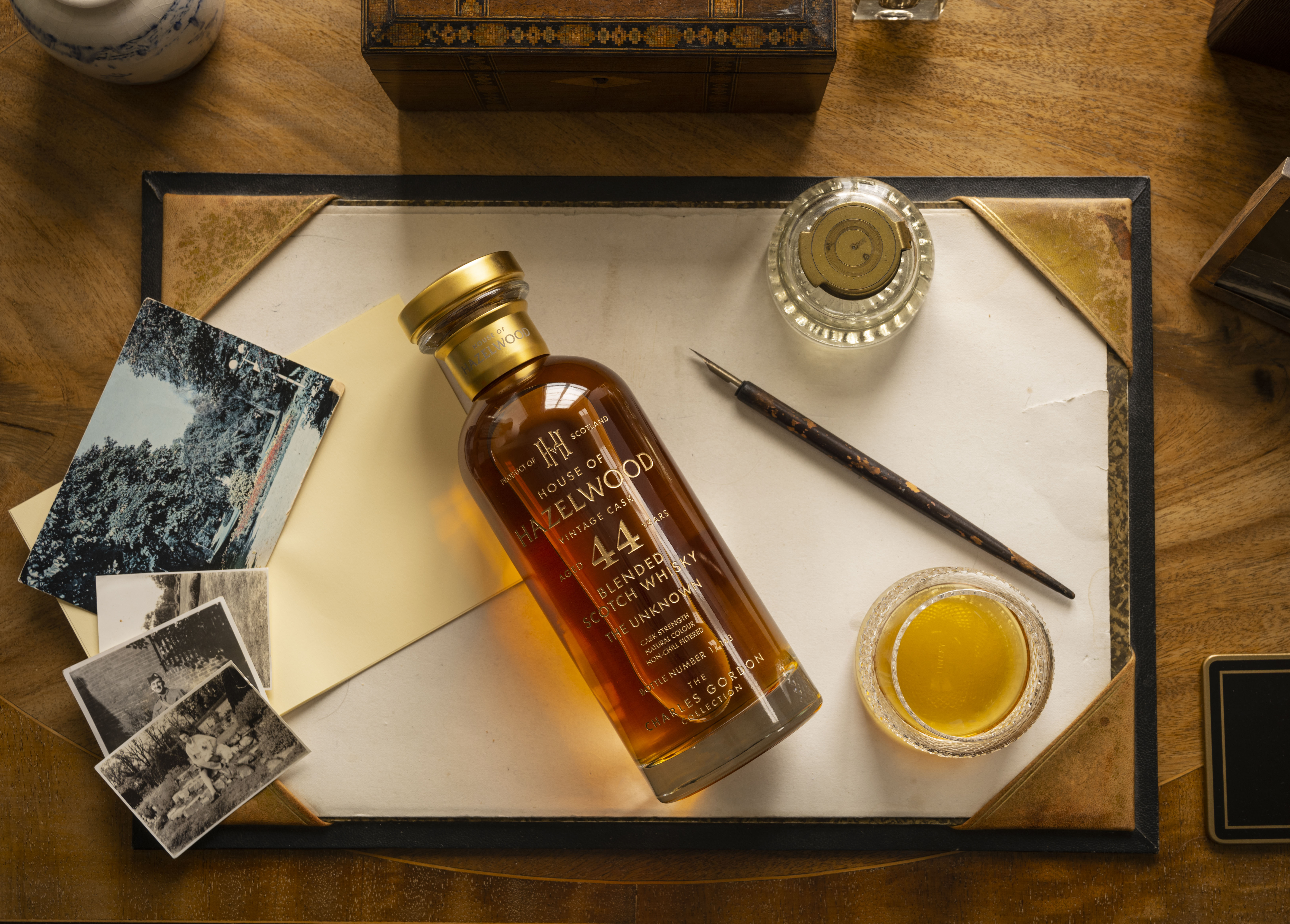


House of Hazelwood "The Unknown" Blended Scotch Whisky (43.3% ABV, 44yo, 1 of 143 bottles, Blended Scotch, Scotland, £3,000)
---------------------------------------------------------------------------------------------------------------------------------------------------------------------
Distilled in 1978 and blended in 1989, "The Unknown" underwent an extensive secondary maturation for a further 33 years in a single refill butt

Colour: Bright yellow-gold.

Nose: Fresh vanilla pods in a fruit salad - pear, peach, apple predominantly.

Palate: More vanilla - creamy, with the same fruit salad notes from the nose, adding in nectarine and some citrus. There's a light, delicate mouthfeel and an underlying sweetness you find with some old grain whiskies.

Finish: Medium to long in length, with vanilla-laced smooth oak notes.

Rating (on my very non-scientific scale): 91/100 (Martin).


House of Hazelwood "A Breath of Fresh Air" Blended Grain Whisky (46.4% ABV, 37yo, 1 of 417 bottles, Blended Grain, Scotland, £3,000)
---------------------------------------------------------------------------------------------------------------------------------------------------------------------

Colour: Morning sunrise golden

Nose: Strawberries, Butter Menthol lollies, creamed honey and an underlying butteriness.

Palate: Light, with the buttery notes continuing alongside some rum-like esthers, heather & honey.

Finish: Medium in length, with a sweet buttery shortbread note that gains some dryness towards the end.

Rating (on my very non-scientific scale): 90/100 (Martin). A delightful example of the unique characteristics old Grain whisky can produce.


House of Hazelwood whiskies are available now in UK and Australia, purchased directly from the official website, with further distribution to follow. The collection is expected to grow every 6-9 months (with another 8 bottles added), and we can't wait to see how the future releases shape up.

Cheers,
Martin.

Thanks to House of Hazelwood for the samples, and to Jonathan for his time.

Tuesday, 28 December 2021

Akkeshi Kanro & Boshu Single Malt Japanese Whisky (& Usui blended whisky) [Tasted #556 - 558]

After a bit of a pause, we're continuing our look at what Japanese whisky is today, this time with a trio of releases from Akkeshi - namely the "Kanro" & "Boshu" single malts, and "Usui" blended whisky.

These releases (sold and distributed in Hong Kong by AFTrade) are numbers 1, 2 and 3 in what will eventually be a 24 bottle series, known as the "24-season series", representing the 24 divisions of the solar year. 


Construction of the Hokkaido-based Akkeshi began in 2015, with distillation starting from October 2016. With stills by Forsyths (5,000L wash still, 3,600L spirit still) and the use of Mizunara casks, the distillery fuses the best of Scotland and Japan to, in their words"create a whisky similar to Islay malts" - a departure from the typically lighter, unpeated Japanese whiskies we see today.

Following in the footsteps of some other new distilleries, Akkeshi released a few pre-whisky spirit bottlings to give people a taste of what was to come, under the "Foundations" range. I remember back in the day (when travel was possible) spotting and trying some of these at bars all over Japan - at 200mL and ~¥3,300 each, they were a cheap and accessible way to get an insight into the distillery's future whiskies.

Their first single malt whisky ("Sarorunkamuy") arrived in February 2020, and the series above followed. Let's dive in...

Akkeshi "Kanro" Single Malt Japanese Whisky (55% ABV, NAS, Hokkaido, Japan, no longer available)
-------------------------------------------------------------------------------------------------------------------------------------------------------
Colour: Yellow golden sunset.

Nose: Slight cereal note, with citrus spice, subtle smoke, and big notes of paprika and sandalwood. Slight salinity.

Palate: There's obvious peat, but a lighter, sweeter, fruitier variety. Hints of strawberry and orange, sea salt air, strawberries & cream, and a little of that cereal from the nose.

Finish: Long, light peat and slight new oak notes.

Rating (on my very non-scientific scale): 90/100.


Akkeshi "Boshu" Single Malt Japanese Whisky (55% ABV, NAS, Hokkaido, Japan, no longer available)
-------------------------------------------------------------------------------------------------------------------------------------------------------
Colour: Light yellow gold.

Nose: Citrus, lemon peel, blueberry, chocolate strawberries and a slight salinity.

Palate: Soft, subtle floral wooded smoke. Oak, coconut and campfire notes.

Finish: Dark chocolate, slight oak bitterness, citrus peel.

Rating (on my very non-scientific scale): 89/100.

Akkeshi "Usui" Blended Japanese Whisky (48% ABV, NAS, Hokkaido, Japan, no longer available)
-------------------------------------------------------------------------------------------------------------------------------------------------------
Colour: Golden amber.

Nose: Burnt toast, cereal grains, milk chocolate powder.

Palate: Sweet and floral, with notable sandalwood, orange peel and hints of fresh oak. Sweet and robust, with caramel chews after some time.

Finish: Long, soft oak with a slight pepper spice.

Rating (on my very non-scientific scale): 88/100.

Thanks to AFTrade for the samples of these whiskies. Whilst they're now all sold out, subsequent releases in the series are now available.

Cheers,
Martin.

Wednesday, 16 December 2020

A bounty of single cask 1960s and 1970s Glenrothes from The Last Drop Distillers [Tasted #501 - 507]

As mentioned in my recent post on The Last Drop Distillers' 56yo Blended Whisky, there were a few more samples included in the package along with the blend...and by "a few" I mean 7 individual cask samples of 1968, 1969 and 1970 Glenrothes!

Ordinarily I'd be happy to dive into all of them myself, but I'd been treated to some particularly nice whiskies from Kam at Dram Good Stuff lately, including our 500th whisky tasted on TimeforWhisky.com, so I thought I'd share the love a bit.

Bottled in 2018 (1968), 2019 (1969) and 2020 (1970), the whiskies were all (give or take) 50 years old, and in the case of the 1969 and 1970, were from casks filled on the same day. It's not often you get to try whiskies filled on the same day and matured side-by-side for ~50 years!


Detailed tasting notes were included (some from Charlie Maclean, some from a bloke in a hat...), which made for interesting reading, but really, we were keen to taste for ourselves, so wasting no time, Kam and I got stuck in...


1968

The Last Drop 1968 Glenrothes (cask #13504) (51.2% ABV, 49yo, IB, 1968-2018, 1 of 168 bottles, Speyside, Scotland)
--------------------------------------------------------------------------------------------------------------------------------------

Tasted by Martin
Colour: Golden amber.
Nose: Fruity and floral, after time, hints of paprika, pineapple and pot pourri. Old cigar box and interestingly, raspberry coulis!
Palate: Big and zesty - flamed orange peel, followed by an almost BBQ meatiness. Oak shows, but doesn't dominate.
Finish: Long oak tannins emerge, coated in orange wafts of smoke.
Rating (on my very non-scientific scale): 93/100.

The Last Drop 1968 Glenrothes (cask #13508) (50.2% ABV, 49yo, IB, 1968-2018, 1 of 141 bottles, Speyside, Scotland)
--------------------------------------------------------------------------------------------------------------------------------------
Tasted by Kam

Nose: Very complex, light sweet smoke infused herbs, lovely minerality .. more sweet smoke with faint floral notes, almond oil, hints of mint (beeswax in the glass when empty )
Palate: Full mouthfeel - spicy and grassy simultaneously, slight bitter tobacco towards the end
Finish: Medium length.
Rating: 92/100.


1969

The Last Drop 1969 Glenrothes (cask #16207) (47.1% ABV, IB, 1969-2019, 1 of 141 bottles, Speyside, Scotland)
--------------------------------------------------------------------------------------------------------------------------------------

Tasted by Martin
Colour: Orange sunset.
Nose: Green apple, kiwifruit, banana leaves, rockmelon, overripe bananas, with a hint of sandalwood and honey after time.
Palate: More muted than 1968 #13504, but with more sherry and oak. Rich treacle, old wood, lacquer, cherry, with a chewier, oily, viscous mouthfeel. A hint of mint rounds things out.
Finish: Mint and basil, old oak, leather. Medium in length.
Rating (on my very non-scientific scale): 92/100.

The Last Drop 1969 Glenrothes (cask #16203) (46.3% ABV, 49yo, IB, 1969-2019, 1 of 130 bottles, Speyside, Scotland)
--------------------------------------------------------------------------------------------------------------------------------------
Tasted by Kam

Nose: Vibrant with lots of fruit; banana, honeydew melon … grassy herbaceousness, citrus (lime) and hints of raspberry… faint charred oak, cedar chips and almond oil
Palate: Gentle mouthfeel that instantly dries the cheeks, mild spices, nuttiness and honey
Finish: Long but muted.


1970

The Last Drop 1970 Glenrothes (cask #10586) (45.3% ABV, IB, 1970-2020, 1 of 103 bottles, Speyside, Scotland)
--------------------------------------------------------------------------------------------------------------------------------------

Tasted by Martin
Colour: Yellow gold.
Nose: Spiced fruit - spiced apple tart, kiwifruit with lemon drizzle. A little heat.
Palate: Banana chews, menthol drops, toffee chews. Slightly "thinner" than the others, with notes of apple, pear and kiwifruit.
Finish: Medium to long length, retaining the previous fruitiness - kiwifruit and nectarines. Old oak cask notes towards the end.
Rating (on my very non-scientific scale): 92/100.

The Last Drop 1970 Glenrothes (cask #10588) (44.1% ABV, IB, 1970-2020, 1 of 87 bottles, Speyside, Scotland)
--------------------------------------------------------------------------------------------------------------------------------------

Tasted by Martin
Colour: Yellow gold
Nose: Furniture polish, cigar box, sweet vanilla, then rich, creamy chocolate ice cream.
Palate: Spicy, slightly earthy smoke, grassy, with caramel fudge richness coming through after time. Oily, sandalwood hints and chocolate-coated caramel (Fantails). Residual oak notes.
Finish: Medium to long, with sweet toffee fudge, tobacco, mint and grass.
Rating (on my very non-scientific scale): 92/100. Complex - quite a mixed bag, but it works, well.

The Last Drop 1970 Glenrothes (cask #10589) (45.0% ABV, IB, 1970-2020, 1 of 96 bottles, Speyside, Scotland)
--------------------------------------------------------------------------------------------------------------------------------------
Tasted by Kam

Nose: Open freshness with summer fruits; guava, peaches .. lots of coconut, shea butter hand cream, hint of sea air.
Palate: Explosive with tastes matching up perfectly with the aromatic notes… warming and full mouthfeel, hints of peaches, almond oil.. mild bitterness at the very end…
Finish: Long and luxurious.


It's not easy to try whiskies this old and rare these days, but to taste so many casks (in some cases filled on the same day) side by side was a real treat - a huge thanks to The Last Drop Distillers!

Cheers,
Martin.

Friday, 30 October 2020

Tasting The Last Drop Distillers 56 Year Old Blended Scotch Whisky [Tasted #494]

The Last Drop is not a bottler who could be accused of rushing bottles to market. Since their inception, they've only released 18 spirits (and two Ports...including this one at a spritely 148 years old), all of them seriously old. I've been lucky enough to taste a few of their previous releases, including a 50yo Blend and 70yo Cognac, and they've all been fantastic.

That theme continued recently, when a sample of their latest Blended Scotch Whisky, a 56 Year Old (release XVI) landed on the doorstep at TimeforWhisky HQ - along with 7(!) samples of 1960s Glenrothes casks, to be covered in a future post.

Only four barrels make up the blend, containing over 60% malt content. After nearly 20 years in sherry butts, the casks saw a long "finish" in ex-Bourbon casks. Talk about doing things in reverse - a Bourbon "finish" which goes for longer than the initial maturation?!

It works, though. 

732 bottles were released (along with the customary 50mL sample bottles that accompany most Last Drop releases), at £3,750.


The Last Drop 56 Year Old Blended Scotch (47.2% ABV, 56yo, Scotch Blend, £3,750
--------------------------------------------------------------------------------------------------------------------------------------------------------------
Colour: Golden amber.

Nose: An initial fruity, floral bouquet (oranges, pears, raspberry, followed by pot pourri) gives way to hints of paprika, pineapple, and ultimately rich, deep cigar / cedar notes from an old cigar box. Fantastic.

Palate: Big and zesty, flamed orange peel first, then a slight meatiness followed by a vanilla sweetness. There's oak throughout, but it's muted. Honey-drizzled oat cakes round things out nicely.

Finish: Oak tannins start to emerge (but again, well-balanced) along with orange blossom water and a slightly spiced vanilla note at the end.

Rating (on my very non-scientific scale): 93/100. Not quite reaching the dizzying heights of the brand's 50 Year Old Blended Scotch Whisky (tasted here, rated 95) which, still to this day, is the best blended Scotch I've tried, but excellent nonetheless. We're talking about blends that count few others as peers, here. Top stuff indeed.


That makes 3 blends we've tried from The Last Drop now - all of them absolutely stunning. With Colin Scott recently joining the company as Master Blender, we can't wait to see what the future holds...

...but actually, we know what the immediate future holds, as The Last Drop have just announced threw new limited editions:

  • Release no 19: The 1980 Buffalo Trace Bourbon Whiskey. 240 bottles worldwide, £3,500 ex-VAT
  • Release no 20: The 1976 “Overproof” Jamaica Rum. 183 bottles worldwide, £2,600 ex-VAT
  • Release no 21: The 1959 Vintage Grande Champagne Cognac. 21(!) bottles worldwide, POA.


Rebecca Jago, Managing Director of The Last Drop Distillers notes: “This is a very special autumn for us: it is an opportunity to showcase a trilogy of superb releases that demonstrate our unique cross category approach. We are particularly excited to present our first ever Rum: this is a spirit we have long hoped to find, but we have been disappointed until now. Each of these spirits is a small marvel of its kind, just waiting to be savoured by those seeking the truly remarkable."

An exciting time for the brand, and a no-doubt even more exciting future with Colin on-board.

Cheers,
Martin.

Wednesday, 11 December 2019

Starward Tawny [Tasted #477]


Christmas in Australia has never been synonymous with cold, cosy, dark, sit by the fire kind of season. In fact, Santa is often seen surfing and basking in the hot Australian sun.

And just because the weather is getting warmer, it doesn't mean that it's time to stash away those whisky bottles. In fact, some whiskies are more fun and more festive in summer. Take this decadent Starward Tawny as an example. The sweet and tantalising nature of this new release from Starward means that you can feature it as part of a Christmas feast or a festive dinner with friends. You can mix it up with some ice and tonic to make a fun Christmas cocktail but it's also great to have on its own.

Starward Tawny is Starward's first Tawny cask release. Small 100L tawny fortified wine barrels from Yalumba were used to mature its whisky and to provide a full-bodied taste. Tawny ports have always been known for its rich, sweet, elegant and smooth complex flavours and Yalumba Tawny is no different. Yalumba Tawny is known for its aromas of rich caramels, sweet figs, chocolate, liquorice spices, wood-aged nuttiness and dried fruits and nuts. So what do you get when you marry Starward's single malt whisky with Yalumba's Tawny casks? A rich and complex marriage of the two.

Starward Tawny follows Starward's key signature of ageing its whisky in small wine barrels. The Tawny is no different with the use of tawny port wine barrels. 

Starward's Head Distiller and Tawny cask innovator, Sam Slaney notes, ".. with a palate of rich dried fruits, brown sugar and nutmeg, Starward Tawny can be enjoyed neat, with food such as blue cheeses like stilton and Roquefort, or rich desserts or as a digestif." 

There were certainly loads of Christmas flavours that you do get from the Tawny. Everything from Christmas fruit cake, raisins, glazed cherries to the myriad of cakes. Starward has always been fun on the palate and the Tawny is no different. These flavours have partially been derived from the tawny casks as well as Starward's signature fruity DNA.

The bottle may look familiar to some, the label shares a similar design to the label of Starward's other limited edition releases including the Ginger Beer cask release as well as the Bourbon cask release. I had fun featuring this bottle with all sorts of Christmas ornaments for this post.

Now, whilst Starward's previous limited-edition releases including their Bourbon Cask release sold out in minutes, Starward Tawny has strategically upped its outturn with around 4,000 unique bottlings out there in the market. It does present a good opportunity for those wanting a bottle of the Tawny ahead of Christmas or any time really.

Starward Tawny (48% ABV, NAS, Blend, Melbourne, Australia, A$119)
--------------------------------------------------------------------------------------------------------------------------

Colour: Caramel

Nose: The nose is creamy. It is loaded with sweet cakes from sweet vanilla meringue, Christmas fruit cake with glazed cherries, cream, summer fruits, figs and some orange marmalade.

Palate: The palate is sweet with that slice of vanilla cake, some raisin, plums, stone fruits followed by dried spices; pepper and nutmeg and a hint of caramelised sugar.

Finish: The finish is long and dry, leaving a nice, sweet, tannic, spiced remnants which lingers for some time.

Rating (on my very non-scientific scale): 92/100.

Thanks to Starward and Dialogue PR who kindly provided the Starward Tawny bottle for review.

Cheers
Hendy

Friday, 22 November 2019

Johnnie Walker Game of Thrones "A Song of Ice" and "A Song of Fire" (Tasted #471-472)

Diageo is continuing its Game of Thrones series with the release of two limited edition blends – Johnnie Walker "A Song of Ice" and Johnnie Walker "A Song of Fire". These two new releases are based on the overarching book series "A Song of Fire and Ice", of which Game of Thrones was part of.

A Song of Ice, containing malt whisky from Clynelish distillery, is described as having a ‘crisp, clean taste’ with a ‘green and grassy’ flavour and notes of ‘vanilla and tropical fruit’.

A Song of Fire containing peated malt whisky from Caol Ila distillery, is said to feature ‘subtle smoke tempered by a rich, rounded sweetness’, and is bottled at 40.8% abv

These releases follow the launch of "White Walker" by Johnnie Walker last year and Diageo's Game of Thrones Single Malt Collection earlier this year.  The latter was a series of eight limited edition single malts that represented the Great Houses plus the Night's Watch. Personally, there were some real highlights from the collection including the Lagavulin (Lannister), Oban (Night's Watch) and Dalwhinnie (Stark).

Now, the White Walker and the Single Malt Collection were launched in anticipation of the final season of Game of Thrones which aired in April 2019. However, both A Song of Ice and A Song of Fire have been released post the end of the final season. Whether this point to an upcoming Game of Thrones series, it hasn't been confirmed though there are rumours a prequel is in the works.

The bottle design have been inspired by the two great houses who face off in final season of the series - House of Stark (represented by the Direwolf) and House of Targaryen (inspired by Daenerys Targaryen aka Mother of Dragons). The sigil of both houses, a direwolf and a dragon were used on the bottle design.

Tasting notes aside, the bottles have been impeccably designed. A Song of Ice share the same colour and design as its White Walker release from last year. On the contrary, A Song Fire incorporates a bolder design featuring what looks like Drogon, one of Daenerys' dragons.

Tasting them side by side, is one tastier than another? They are both different and I personally, prefer the A Song of Ice over A Song of Fire though they may appeal to different taste buds.

Johnnie Walker "A Song of Ice" (40.2% ABV, NAS, Blend, Scotland, A$69.99)
--------------------------------------------------------------------------------------------------------------------------
Colour: Pale Straw

Nose: Herbaceous, fresh hay. There are some sweet treats from apple stew, stone fruits, vanilla and orange zest.

Palate: The palate is soft yet lightly spiced and has layers of flavours from oranges, vanilla, nutmeg and stone fruits. Although the palate is soft, it still packed quite a complex profile.

Finish: Short to medium, with warming spice and herbaceous notes.

Rating (on my very non-scientific scale): 89/100.


Johnnie Walker "A Song of Fire" (40.2% ABV, NAS, Blend, Scotland, A$69.99)
--------------------------------------------------------------------------------------------------------------------------
Colour: Flame Amber

Nose: Orange, vanilla and black pepper. Very soft and light on the nose. There's a small hint of peat.

Palate: Light and soft. There's tannic when you first taste it which is then followed by vanilla, black pepper spices and a hint of peat. You would think this is the one with the Clyenish malt but no, the primary malt is in fact, Caol Ila.

Finish: Short, with warming fading notes. The spices also disappear quickly .

Rating (on my very non-scientific scale): 85/100.


At $69.99 a bottle, these new blends are great for those looking to fill Santa's stockings ahead of Christmas. Both Johnnie Walker A Song of Ice and A Song of Fire are now available from liquor stores nationwide.

Cheers
Hendy

A big thanks to Diageo and Fuel Communication for providing samples for review.

Tuesday, 19 March 2019

The Starward Journey (Tasted #447)

The Australian whisky industry has rapidly grown over the past couple of years and has established a formidable reputation globally. There is a deep interest in the category as David Vitale, Starward  Founder found during his time in Los Angeles last year, presenting his Starward story, the Australian whisky profile as well as introducing people to the notion of wine cask whisky maturation – a slightly foreign concept in the Bourbon-saturated market.

With over 200 distilleries in Australia (many producing whisky), the opportunity is ripe to build up the profile of Australian whisky abroad and Starward, together with a few other Australian distilleries are at the helm.

David mentioned during the Two Fold launch last year that it wasn't that long ago that there were only a handful of craft whisky distilleries in Australia, and that:
"We ought to owe it to Bill Lark for the booming craft whisky distillery industry that we now see. Bill questioned the 1901 Distillation Act and lobbied the government for the Act to be amended so as to allow acquiring of the distillation licence with no archaic requirement for large volume distillation. Lark then became the first distillery to open in Tasmania since 1839."

The story of Starward, on the other hand, began after David worked in a prominent Tasmanian distillery in 2007. David had set out to create a whisky that can bring together his love of food, craft beer, family and one that can reflect his hometown of Melbourne and that of Australia - from its culture to Melbourne's famed ‘four seasons in a day'.

When we sat down with David back in early 2013, and toured the distillery in late 2013, Starward Whisky was then known as the New World Whisky Distillery (NWWD, and before that, Victoria Valley Distillery). The whole operation stemmed from an idea in 2004 with NWWD beginning its operations in 2007 and filling their first barrel at the beginning of 2010. At the time, David and his team had the vision to create a whisky that was "just like the country it is made in - youthful, rich and bright".

Although distilling whisky in Melbourne (initially near Essendon Airport and now at Port Melbourne) actually dates back to 1862, as a country we're not well-known for having a long history of whisky, a fact which has given NWWD the perfect opportunity to create something unique.


This notion of whisky maturation is different here in Australia, as compared to Scotland or the United States. David believes that the difference is even more prominent in Melbourne with its weather complex and temperature differentials that can help mature whisky quickly and yet still produce a complex, flavourful and rich whisky.

The same can be said for many craft distilleries dotted across Australia. Unbounded by any maturation rules, the Australian weather has been a blessing (sometimes a curse) in the influencing of whisky maturation here in Australia. The final whisky can vary in profile though regardless, it is both exciting and different.

David's creation, dubbed 'Starward,' - a brand that is now synonymous with Australian whisky - is a whisky matured in Australian wine barrels for 3 “Melbourne Years” and was first launched in 2013. Following the launch, Starward was instantly recognised for its bold spirit and flavour, leading to it to become what is now the fastest growing Australian whisky brand, and one of the few Australian distilleries that can distil at scale. In developing Starward, David had to bring together brewers, ex-winemakers and fresh talents and the effort has seen Starward consistently commended for its quality and expressions.

Fast forward to 2019 with the recent launch of Starward’s two new bottlings; Starward Two Fold and The Seafarer.

The former, Two Fold was a significant milestone for Starward as it is the first blended grain whisky to be launched in Australia and at the same time, priced at a point that makes it quite accessible. David is keen to drive the strategy to make Starward the whisky of choice at every Australian's dining table. He is also a believer that there is a place in the world for Australian craft whiskies - which have given him focus to grow Starward abroad, in particular most recently within the United States. Since launched, Two Fold has garnered quite a reputation and was recently awarded whisky of the year by the Oak Barrel (Sydney).

The latter, the Sea Farer was launched in February 2019 and was borne out of a 225-litre French oak wine barrel filled with Starward and matured on the Queen Elizabeth’s ship deck for almost a year. The barrel experienced temperatures as cold as zero as it visited Helsinki, St Petersburg, Lisbon, Venice, Hong Kong, Penang and Cape Town. Temperature can be as balmy as 32 centigrade, as the barrel snaked its way across the globe over exactly 347 days.

The journey for Starward and Australian whiskies has just begun (in the grand scheme of things) and distillers across Australia are now banding together to raise the profile of the industry and the uniqueness within and personally, I'm excited about what the future brings.


Starward Two Fold Double Grain Australian Whisky 700mL (40% ABV, NAS, Blend, Scotland, $69.99)
--------------------------------------------------------------------------------------------------------------------------
Simple, clean and still tasty. A very different Starward release to their single malt bottling Nova. Whilst unmistakably blended, it is still enjoyable with lots of Starward classic flavours of vanilla, banana and berries.

Colour: Caramel

Nose: The nose is sweet and appealing. There is a mix of vanilla, banana,  berries combined with a hint of citrus, malted cereals and a subtle hint of peat smoke.

Palate: The palate is laden with honey, peaches, malt, white pepper, berries before becoming a bit tannic.

Finish:  The finish continues with a tannic, drying, medium long length.

Rating (on Hendy's very non-scientific scale): 92/100

Cheers,
Hendy.

Thanks to Starward and Dialogue PR for inviting Time for Whisky to the Starward Two Fold launch.

Sunday, 3 March 2019

Experiencing the Johnnie Walker Blue Label Bothy (Tasted #434 - 437)

No strangers to hosting impressive whisky events, Diageo HK exceeded even their own high standards last week with the launch of the Johnnie Walker Blue Label Bothy at Test Kitchen in Hong Kong - the global launch of what is to become (over the coming year) an experience whisky fans in a number of countries will get to enjoy.


Non-Scottish readers may be wandering exactly what a "bothy" is, and for that we'll turn to that Oracle of (mostly) truth, Wikipedia:
"A bothy is a basic shelter, usually left unlocked and available for anyone to use free of charge. It was also a term for basic accommodation, usually for gardeners or other workers on an estate. Bothies are to be found in remote mountainous areas of Scotland, Northern England, Northern Ireland and Wales."
Far from "basic" however, the Johnnie Walker version saw Mr. Noël Berard (Chef de Cuisine at 2 Michelin-starred Écriture Restaurant) and Mr. Nicholas Chew (Executive Chef at BIBO) team up to produce a 5 course tasting menu matched to some of the malt & grain whiskies which make up Johnnie Walker Blue Label.


Kicking things off with a delicious cocktail made with Johnnie Walker Gold Label, caramel and bitters (alongside a Foie gras mousse, Huon Valley cherry and royal schrenki caviar amuse bouche), Diageo Marketing Director Drew Mills welcomed us, explained the concept of the Bothy and introduced us to our two chefs.


Upstairs in the intimate 15 seater dining room, we took our seats and within minutes were poured a healthy serve of JW Blue Label, which Drew assured us would remain topped up throughout the lunch, should we wish. 

Drew explained we'd be taking a tour around Scotland, enjoying four drams from distilleries that make up JW Blue Label, and that these were no ordinary bottlings (two of them being from Diageo's "Special Releases" range, and one being a 2016 40year old Special Releases whisky...but at 43 years of age)! With 10 million casks in reserve (worth more than all the gold in the Bank of England's vaults), Drew explained that Diageo had their fair share of quality whisky upon which to draw...


Starting with the islands of the West Coast, our first dram was Talisker 25 Year Old (45.8%), matched with Smoked Scottish langoustine, onion dashi jelly and beetroot feuillantine (by Écriture). Absolutely no word of a lie - this was the best whisky and food pairing I've ever had. The langoustine and Talisker each accentuated the saltiness in the other, but there was a beautiful underlying sweetness from the jelly. This was one of those pairings where everything just worked perfectly, and both food and whisky (whilst excellent on their own) were dramatically improved by each other.


Talisker 25 Year Old (45.8% ABV, 25yo, Skye, £216.58, but not available at time of writing)
--------------------------------------------------------------------------------------------------------------------------
Colour: Golden orange sunset.

Nose: Rich salted caramel and red berries. Aged oak, and more rich fragrant caramel.

Palate: Lots of citrus initially - whole oranges, and even some nectarines. Then creamy toffee apple notes, some subtle underlying salt-laden sea air, caramel chews, BBQ smoke and dried mango pieces.

Finish: Long, sweet with an underlying salty smoke to the end.

Rating (on my very non-scientific scale):  91/100.


Next we moved over to the Highlands - Teaninich specifically, in the form of Teaninich 1999 17yo (55.9% ABV) from Diageo's 2017 Special Releases line-up, paired with Celeriac, sepia ink, Hokkaido oursin/urchin and Lardo di Colonnata (by BIBO)

Another stunning pairing (quite possibly the second best I've ever had), the whisky and Lardo di Colonnata produced this rich, creamy, vanilla sensation together which was truly delicious.

(Having enjoyed my fair share of whisky lunches and dinners since starting this blog, it was incredible that the first two pairings qualified as the best I'd ever had. Clearly a lot of thought went into this lunch on both the food and whisky side.)


Teaninich 1999 17yo (Special Releases 2017) (55.9% ABV, 17yo, Highlands, £220.83)
--------------------------------------------------------------------------------------------------------------------------
Colour: Light straw.

Nose: Malty, oat cakes. Some subtle pineapple, rockmelon and Malteaser chocolates.

Palate: Big, sweet and fruity - pears and apples predominantly. There's a lot of wax here too - if someone told you it was a Clynelish, you may just believe them.

Finish: Long, with hints of waxy apples and toffee.

Rating (on my very non-scientific scale):  92/100.


For our last savoury course, it was over to Speyside, for a dram of Glen Elgin 18yo 1998 *54.8% ABV), also from Diageo's 2017 Special Releases. Matched with A4 Wagyu, truffle and seaweed compote and horseradish (by Écriture), this was another solid pairing with the whisky seemingly bringing out more earthiness from the truffle, which was otherwise somewhat subtle.

I didn't realise when I first tried the  2017 Special Releases, but this wasn't just an ordinary, higher-ABV 18yo Glen Elgin. It was actually an interesting experiment in...yeast! The 5,352 bottle outturn was a vatting of two whiskies - one an 18yo made with the use of "Pombe" yeast (matured in ex-bodega casks), the other an 18yo made with the more traditional "cerevisiae" yeast (matured in refill European butts). The Pombe yeast is said to give some strong apple notes, and that was certainly the case with this dram.


Glen Elgin 1998 18yo (Special Releases 2017) (54.8% ABV, 18yo, Speyside, £229.12)
--------------------------------------------------------------------------------------------------------------------------
Colour: Pale straw.

Nose: Fresh apples, lemon juice. Quite tart.

Palate: Big orchard fruits - pears (stewed) and apples (both fresh and cooked). There's a maltiness, a creaminess, and some honey. Very much a "breakfast" whisky - grains, honey, toast and fruit!

Finish: Huge on the stewed apples, with a slight underlying hint of oak and lingering sweet apple chew lollies at the end.

Rating (on my very non-scientific scale):  91/100.


Our last whisky saw us heading to the Lowlands, for a 43yo Cambus (distilled in 1975, 51.6% ABV) paired with Chocolate 'Trio' & pistachio nougatine (by BIBO). Now a 43yo single grain whisky might sound pretty special, but this one was extra special for me. 

In 2016 I'd been fortunate enough to try a few of the 2016 Diageo Special Releases (during a visit to Johnnie Walker House in Singapore), and was absolutely floored by the Cambus 40yo, which I'd given 95 points. When I heard about the Bothy, and read the line-up, it appeared we'd be tasting the same whisky (and indeed, the menu suggests so, as does the label on the bottle below).

...but no. And yes. The whisky paired with this course was indeed that whisky, but with another 3 years of age (left in the vat presumably as it wasn't a single cask), and with a 0.9% reduction in ABV. As a whisky geek, this is the sort of stuff I love...especially when it involves a whisky I enjoyed so much the first time. I have to admit, I didn't really try much of the whisky paired with the dessert here. For me, the whisky was the dessert (although having said that, the dessert on its own was absolutely delicious, with three different chocolate cacao percentages all coming together beautifully).


Cambus 1975 43yo (Special Releases 2017) (51.6% ABV, 43yo, Lowlands, not commercially available however the 40yo release from 2016 is £662.50)
--------------------------------------------------------------------------------------------------------------------------
Colour: Honey gold.

Nose: Rich varnish, sweet, fruit. Some of the grape notes I originally found on the 40 were still there, but there was more oak this time alongside them.

Palate: There's the grape notes - grape hard candy, grape Hubba Bubba, a toffee creaminess, with some peaches and cream.

Finish: Long, fruity and creamy. More peach, more grape, and no noticeable oak tannins.

Rating (on my very non-scientific scale):  93/100. I scored this higher in 40yo guise, however this was still a fantastic dram.


Having enjoyed such an incredible meal, there was nothing left to do but savour the remainder of our Johnnie Walker Blue Label downstairs in the comfort of the bar, perusing one of only 8 copies of "Around the World" in existence - a travel guide (of sorts) created by Alexander Walker himself covering all the markets Johnnie Walker was sold in at the time.


An absolutely huge thanks must go to MHDHK, Drew, and the PR team for the invitation to this stunning event. If and when a Bothy pops up in your city, I can highly recommend the experience.

Cheers,
Martin.