Showing posts with label 91. Show all posts

Monday, 27 April 2026

Tasted #709: Archie Rose "Smoked Cask Series" Cinnamon Smoked Single Malt Whisky

One of the many great things about the Aussie whisky industry is the freedom afforded to (and actively embraced by) its producers. Whilst there are rules, they're less restrictive than (say for example) SWA's rules for Scotch Malt Whisky, and so you tend to find some pretty fun and interesting releases - whiskies matured in woods other than oak, whiskies finished in a plethora of interesting cask types (Ginger Beer Cask, anyone?), and in this case, whisky matured in casks which themselves have been smoked with different botannicals.

"Smoked Cask Series" is the name, and as Archie Rose Master Distiller Dave Withers puts it:
“In Australia, we’re fortunate to be unbound by tradition, which gives us the freedom to be bold and find our own new ways of doing things. With that in mind, this series is all about reimagining what a smoked whisky can be; questioning why the flavour of smoke can only come from the treatment of grains.

We wanted to tackle the question of whether we could bring a different dimension to our whisky by smoking the maturation casks, instead of the grains,” Dave says. “It’s also about testing the boundaries of where that smoke comes from. Conventional smoky whiskies are always made with peat or sometimes timber smoke, but here we have shown that a different set of flavours can be created through the use of aromatic botanicals like the ones we’ve used for this series"
For the series, 4 botanicals (Wattleseed, Juniper, Cinnamon and Lavender) were chosen after 30 different trials. I sat down with “Cinnamon Smoked” (Limited Release No.15) recently, to see what impact this unique form of smoking had on the whisky.


Archie Rose "Smoked Cask Series" Cinnamon Smoke (51.6% ABV, NAS, Sydney, Australia, One of 495 bottles, sold out)


Colour: Deep toffee brown

Nose: Smoked pineapple, toasted oak, orange zest and hints of charred banana.

Palate: Brings the pineapple from the nose, but more whole oranges than orange zest. Spicy smoke undertones, with some very subtle cinnamon notes.

Finish: Long, warming toasted oak.

Rating (on my very non-scientific scale): 91/100 (Martin). I like Archie Rose's regular single malt spirit, and this is a really fun and tasty twist on it - pairing some of those expected tropical notes with a warming, spicy undertones. This would be great by a fire, as we're getting into winter (shame it's sold out)!


Thanks Mint Partners and Archie Rose for the bottle.


Cheers,
Martin.

Monday, 30 March 2026

An interview with Sullivans Cove Distillery Manager Heather Tillott, and a tasting of two new releases (Tasted #706 - 707)

It's been a big few weeks for Sullivans Cove - not only have they recently announced, for the first time, a cask strength version of the French Oak (at 17 years, no less - ballot open now), along with a French Oak Apera at nearly 10 years old (sold out), they've also just won a World Whiskies Awards "World's Best" for the fourth time - this time for World's Best Single Cask Single Malt Whisky.


Following their now-legendary 2014 win (and subsequent wins in 2018 and 2019) it was French Oak White Wine Old & Rare TD0112 which took home the award this time, beating out 23 other single cask single malt country-winners to take home the prize.


As if that wasn't enough though, the distillery also took home two further "Icons of Whisky" awards for its people, with Distillery Manager Heather Tillott winning the "Innovator Manager of the Year" award, and Warehouse Manager Marcelo Viapiana winning "Global Warehouse Manager of the Year.


It seemed then, like a suitable time to post an interview I held with Heather Tillott last year, when I was lucky enough to join the distillery in celebrating their 25 Year Old whisky milestone.


Martin: 25 years is an incredible achievement for Australian Whisky, but these were distilled at a time when that wasn’t necessarily the goal. 25 years on from that time, has the view towards long-term maturation changed in Australian Whisky and how does Sullivans Cove look at this in particular? Might we see even older Sullivan’s Cove releases in the coming years or decades?

Heather: Quite correct - the goal when these casks were laid down wasn’t to reach 25! The good people in that era of Sullivans were experimenting and learning what it meant to make whisky in Tasmania at that time, and we are very lucky to be able to continue with the work they did so many years ago.
25 years on at Sullivans, we’ve learnt a lot about how to craft spirit that is suited to a variety of ages, and how to nurture casks through the years in order to enable the greatest expressions of each cask to come to life.
While many distilleries founded in more recent years simply haven’t had the time to explore longer term aging, it’s only a matter of time. And while it’s not about an arms race to the highest age statement whisky, it’s also only a matter of time before we see even older Sullivans releases, as this is the nature of the bondstore… Time keeps on moving!


Martin: Since taking over production, how closely did you and your team need to monitor these two casks, or provide any active intervention (eg moving them around the bond store) - to ensure they remained “whisky”, but also didn’t get overpowered by oak and retained the quality Sullivans Cove drinkers expect?

Heather: Very closely. Old spirit can be quite fragile, and so extra care and attention is very important. They’ve both had moves about the bondstores, and both have had a gentle dilution during their maturation. This is an old technique used in Cognac and Scotch to gently reduce proof strength, thus enabling a softer maturation and ensuring the balance of oak remains.


Martin: In recent years as it became clear these tasks would reach 25 years, was 25 years the goal, or were they deemed “ready” (by a tasting panel) then, and it just happened to be at a nice round 25 years?

Heather: We allow each of our casks to tell us when they are ready! It’s a rollercoaster of emotions at times, with some casks in particular, but the end result is a wonderful collaboration of people, place and produce… After all, whisky is a product of agriculture, which means people and place! Thus, we didn’t have a particular age in mind for these two- they both came right on the same tasting panel on the 6th of May. We have a nautical bell which we ring when we decide to decant a cask, it’s in the distillery for all to hear… The bell rang twice that morning.


Martin: As the person responsible for production at  a world-renowned distillery on an island famed for its pristine environment, what is the most important sustainability initiative the Australian whisky industry needs to adopt today to ensure its long-term viability?

Heather: There’s a number of really important environmental initiatives in the operational discussion – irrigation in the field, a move toward organic practices, heat recovery systems in the brewhouse and distillery, co-product relationships with local farmers, sourcing casks closer to home (i.e., Australian wine casks!), etc. And there’s also the equally important considerations in the sustainability conversation around the people and business systems that keep the heartbeat of the industry. There is a range of scale and operations in Australian whisky, with many in the micro space; for us to ensure long-term viability we need an industry which supports all levels of scale, healthy workplaces, healthy businesses, as well as a care for our environment.


Martin: Given your background in winemaking, what's a lesson or technical philosophy you carried with you from the vineyard to the distillery?

Heather: The best advice I’ve ever received was from the world of wine… “Get out of the way.” I.e., don’t try to force the product to be a certain way. Tread gently, get out of the way, and let the magic blossom. It’s the duende!


Martin: Last but not least, it’s been a long day and you reach for something to unwind. Is it wine or whisky?

Heather: At the end of a long day, I like to revisit older bottlings of Sullivans, or high-ester rum. Both hold time to ransom for a while for me – there is nowhere to be other than the moment.


------


Sullivans Cove 17 Year Old French Oak Cask Strength (Cask TD0297 (63.1% ABV, Single Malt, 17yo, 1 of 343 bottles, Tasmania, Australia, $2,500AUD)
---------------------------------------------------------------------------------------------------------------------------------------------------------------------

Colour: Dark Amber-gold

Nose: Big and robust notes of Blackberries mixed with an old dunnage warehouse.

Palate: Super viscous, with notes of gooey caramel, cigar box, a slight salinity and some meatier notes. There's some fruitier notes too - mature oranges and some berries.

Finish: Long and warming, with toasted oak and caramel chews.

Rating (on my very non-scientific scale): 93/100 (Martin). Given what this cask strength expression gives us in the way of flavour and complexity, hopefully this won't be the last CS release we see from the distillery! Delicious.


Sullivans Cove 9 Year Old French Oak Cask Strength (Cask TD0820 (47.6% ABV, Single Malt, 9yo, 1 of 260 bottles, Tasmania, Australia, $550AUD - sold out)
---------------------------------------------------------------------------------------------------------------------------------------------------------------------

Colour: Dark Orange-gold

Nose: Coffee grounds, toffee, fresh oak, flamed oranges and a hint of Eucalyptus.

Palate: Oily, with initial notes of honey, marmalade, and an underlying grassy spearmint. Notes of old oak round things out, but on the whole it's fresh, vibrant and has a lot going on.

Finish: Long and fresh, with the grassy-minty note continuing alongside orange and warming oak.

Rating (on my very non-scientific scale): 91/100 (Martin). I was expecting it to be a tasty dram, but wasn't expecting this much complexity. That was a pleasant surprise.


A big thanks to Heather for her time, and the distillery team for the samples.
 

Cheers,
Martin.

Sunday, 24 August 2025

Ardbeg Anthology 15 Year Old “The Beithir’s Tale” and the Anthology Series (Tasted #697 - #699)

There’s something about Ardbeg that always manages to capture the imagination. For a distillery that spent much of the 1980s and ’90s mothballed or only partly operational, it’s remarkable how firmly it has established itself as a cult Islay favourite since its revival in 1997. From the release of the mighty Uigeadail in 2003, to annual Ardbeg Day bottlings like Grooves and Drum, to more recent crowd-pleasers like An Oa, there’s always been an energy and playfulness around Ardbeg that matches its whisky’s intensity.

It’s also a distillery with a knack for experimentation. From its iconic pagoda-roofed kiln of a bygone era, to unusual cask finishes, and quirky Committee releases like Alligator and Supernova, Ardbeg have always kept Ardbeggians and fans alike guessing. But behind all the different Ardbeg releases, lies one of the most distinctive spirit characters, medicinal, maritime, oily, and unapologetically peaty. Which is why whenever Ardbeg steps into new cask territory, it’s always fascinating to see how that core DNA holds up — and what new dimensions emerge.

The Anthology Collection, introduced in 2023, set out to explore a “sweeter” side of Ardbeg through three different cask experiments, each inspired by a mythical beast. Having now tasted the full trilogy, it’s clear that each release plays with the smoke-sweetness balance in very different ways. The Harpy’s Tale (13yo, ex-Bourbon and Sauternes) turned out to be the brightest and most elegant, with honeyed apricot sweetness tussling against oily smoke — my pick of the series. The Unicorn’s Tale (14yo, ex-Bourbon and Madeira) veered into sharper, baked-fruit territory, with lime and peach syrup layered over smoke and spice. And finally, the Beithir’s Tale (15yo, bespoke “designer” bourbon casks) felt like the most experimental of the three — vanilla, caramel, and toasted oak richness dialled up over earthy peat.

All bottled at 46% ABV, non-chill filtered, and adorned with mythical artwork, the Anthology Collection offers three distinct answers to the question: what happens when you let Ardbeg dance with sweetness?

Ardbeg 13 Year Old “The Harpy's Tale” (46% ABV, 13 Years Old, Islay, Scotland, A$240)

The first in the Anthology Collection, The Harpy’s Tale takes classic Ardbeg smoke and weaves it through the lush sweetness of Sauternes wine casks. On paper, the combination feels almost mythical — and in the glass, it doesn’t disappoint. This is a dram that flits between light and dark, sweet and savoury, all while staying unmistakably Ardbeg.

Nose: Immediately oily and herbaceous, with a salty coastal edge — brine and seaweed against the glass. Then comes a fragrant sweetness: lemon peel, honey lozenges, apricots, even a perfumed lift like dried sage leaves on a bonfire. There’s smoke here, but it’s more wispy and perfumed than the full blast you’d expect from Ten or Uigeadail.

Palate: The first sip is a little surprising — grilled capsicum and wood ash lead the charge, before that honey-lemon lozenge sweetness comes surging back through. Layers of treacle and balsamic richness develop (without the sharp acidity), interplaying with drifting bonfire smoke. It’s savoury and sweet in equal measure, with eucalyptus and charred oak lingering towards the back, dusted with peppery spice.

Finish: Long and lingering, with the embers of a fading bonfire and a persistent spiced warmth that keeps drawing you back for another sip. This is my favourite of the collection.

Rating (on my very non-scientific scale): 93/100 (Hendy)

--

Ardbeg 14 Year Old “The Unicorn's Tale” (46% ABV, 14 Years Old, Islay, Scotland, A$250)

The second chapter in the Anthology Collection, The Unicorn’s Tale, takes Ardbeg’s smoky DNA and pairs it with Madeira wine casks. Where the Harpy’s Tale offered a honeyed brightness from Sauternes, the Unicorn leans into a baked-fruit richness — sharper, nuttier, and just that little bit wilder. It feels like Ardbeg experimenting with sweetness once again, but from a very different angle.

Nose: Immediately rich and fruity — ripe bananas, even those nostalgic banana lollies, mixed with cinnamon scrolls and sweet wooden smoke. There’s depth too, with treacle and peanut brittle sweetness, underpinned by citrus zest and flashes of tropical guava. The peat is there, but it sits like smoke drifting through a sweet bakery window.

Palate: A surprisingly sweet and zesty arrival. Lime cordial and peach syrup coat the tongue, before warming spices of nutmeg roll in alongside vanilla slice and caramel squares. A sweet, woody undertone keeps the balance, while the spirit feels mouth-coating and almost oily. The smoke builds as it develops, wrapping the sweetness in a gentle haze of bonfire.

Finish: Long and lingering, with smoky citrus peel, plenty of ash, and a cool wave of menthol running through the aftertaste.

Rating (on my very non-scientific scale): 90/100 (Hendy)

--

Ardbeg 15 Year Old “The Beithir’s Tale” (46% ABV, 15 Years Old, Islay, Scotland, A$255)

Arguably, the most experimental of the three. The final chapter in the Anthology Collection, The Beithir’s Tale, may just be the boldest of the three. Instead of wine finishes, Ardbeg chose to explore the limits of oak itself, working with bespoke “designer” bourbon casks — air-seasoned, heavily toasted, and lightly charred to specification. Where the Ten shows what classic bourbon casks usually bring to Ardbeg, the Beithir dials it all up a notch: richer vanilla, deeper spice, and toasted sweetness, all mixed with that unmistakable peaty backbone.

Nose: Rich and complex, opening with creme brulee and burnt sugar before a rush of menthol and eucalyptus. Pine needles and fennel add a fresh, herbal edge, while the peat smoke lurks quietly underneath. With time, baked apple pie and sultanas emerge, lending a sweet-fruited counterpoint.

Palate: Zesty and earthy on the palate, quickly becoming richer as blackcurrants, vanilla, and caramel slices coat the palate. The peat smoke undercurrent keeps everything anchored, while layers of citrus (mandarins in particular), black pepper, and a touch of liquorice add depth. It’s mouth-coating and satisfying, striking a balance between sweet oak influence and smoky savouriness.

Finish: Long and defined, leaving smoky embers, liquorice, and lingering spice. A dram that slowly fades.

Rating (on my very non-scientific scale): 91/100 (Hendy)

The Beithir’s Tale feels like the boldest of the three Anthology releases — less about wine finishes, more about cask innovation and the pure interplay between Ardbeg’s spirit and oak. If the Ten is the soul of Ardbeg and Uigeadail its sherried alter-ego, the Anthology series are experimental short stories — each exploring “what if?” scenarios with wood.

The Ardbeg 15 Year Old “The Beithir’s Tale” will be available in Australia from August 26th through the Ardbeg Committee.

Many thanks to the Ardbeg Australia Team for gifting us the new Ardbeg Anthology limited releases.

Cheers,

Hendy

Sunday, 9 June 2024

Archie Rose Single Cask Series [Tasted #670 - #672]

In the world of whisky, few distilleries have carved out such a prominent place as quickly as Archie Rose Distillery in Sydney. Founded in 2014 by Will Edwards, Archie Rose has been known for innovating through all their different releases and for having quite unique proposition including their Tailored Spirits/Whisky Program and wood smoked whiskies. Guided by Master Distiller Dave Withers (one of the most knowledgable whisky folk we know and whom spent some time at the legendary Oak Barrel), Archie Rose has made leaps and bounds over the past decade to make a mark in the Australian whisky scene.

When Archie Rose first opened in 2014, the Australian whisky scene was quite different. Most people equated Australian whisky with Tasmanian whisky, and Sydney had been without a whisky distillery for a long time. In this landscape, Archie Rose emerged with its close proximity to Sydney city, a stunning bar (which we had reviewed back in 2015), unparalleled transparency, and a fresh attitude towards spirits. Along with Starward, which released its first whisky in 2013, Archie Rose began changing the scene.

A visit to Archie Rose in 2015 by Marto revealed the impressive setup and meticulous attention to detail in their production process. The original distillery, located in Rosebery, Sydney, was split into two sections: the production and cask storage on one side, and the stunning bar on the other. The distillery featured a hand-spun hopper for a 600kg mash, mash tun and stills by Peter Bailly, and Italian-made fermenters with temperature control. The distillation process includes a 3,600L steam-heated wash still, a 1,700L spirit still, and a 300L gin still for infusing botanicals. While Archie Rose has moved its distillery to Banksmeadow in 2020, much of the above equipment remain at their original site for display to the public.

Archie Rose’s innovative streak is quite evident over the years. They started with white spirits—gin, vodka, and white rye—and quickly expanded their offerings. The distillery’s approach to local sourcing is one of the things that sets them apart; they source all their malts locally and also use native ingredients such as red gum and stringybark for smoking their rye grain (as opposed to importing peated grain or peated barley).

They introduced the Tailored Spirits program, allowing customers to create their personalised gin, vodka, or whisky. The Tailored program, first, launched in 2015, has been pioneering in making personalised spirits accessible and affordable. In 2018, they continued their innovative pursuits by launching the Six Malt New Make, a new make blend derived from six different malt mash bills. This release provided insights into the base spirit of Archie Rose’s single malt whisky, showcasing their dedication to quality and depth from the start. More recent releases include Heritage Red Gum Cask Single Malt from earlier this year and Double Malt Whisky in 2023, released as part of Archie Rose's Fundamental Spirits Range.

Commencing this year, Archie Rose has also begun exporting their products to Asia, including markets like Korea, Malaysia, and Singapore. The expansion is part of their strategy to present a full portfolio of products and establish a strong international presence.

The upcoming Single Cask Series, to be released on 11 June, includes three distinct releases:

  • The Heritage Rye Malt Single Cask, aged in a single apera cask, serving as a homage to Australia’s heritage of fortified wines and showcasing Riverina-sourced heritage rye malt. This was my pick of the three.
  • The Single Malt Single Cask, an example of what makes Archie Rose’s signature whisky special. This single cask offers layer upon layer of malt-driven flavours, an excellent fruit profile, and a beautifully balanced apera cask influence. At four and a half years old and full cask strength, it delivers quite a powerful and incredibly complex whisky.
  • The Smoked Rye Malt Single Cask, made from NSW heritage rye grain, custom smoked over sustainably harvested Australian native stringybark, offering a truly unique and entirely Australian flavour profile. This cask-strength whisky balances sweetness, smoke, and rye spice with flavours reminiscent of campfire, grilled peaches, and prosciutto.

We sat down with Will and Dave as part of the launch of the Single Cask Batch 1 Release where they noted that one of the significant challenges in whisky production for them is in sourcing high-quality casks. Over the years, Archie Rose partnered closely with wineries though they have now also developed their own method of developing bespoke sherry casks. The process, managed in their Banksmeadow facility, ensures that each cask contributes uniquely to the whisky’s flavour profile. Both the Single Malt and Heritage Rye Malt single cask releases were bottled from ex apera casks.

Will and Dave also shared their thoughts and experience, particularly their frustration in dealing with rye early on in the Archie Rose journey. Rye, known for its glutinous nature, presents a different kind of challenge. Will spoke to the use of a new mash filters at their Banksmeadow facility which they didn't have at their original Rosebery distillery. Will shared his experience in dealing with rye early on, something akin to trying to sieve the liquid out of a porridge; that's basically what working with rye is like. With the new mash filters at the Banksmeadow facility, working with rye has become much more manageable.

"It's an amazing thing to come across a cask and say, 'This. This one right here. That's the essence of what we're trying to achieve." quoted Will Edwards

Single Cask Whisky Batch No. 1: Heritage Rye Malt (68.2% ABV, NAS, Sydney, Australia, A$299)

The Heritage Rye Malt Single Cask has been aged in a single apera cask, serving as a homage to Australia’s heritage of fortified wines and showcasing Riverina-sourced heritage rye malt. This was my favourite of the three single cask releases.

Nose: The aroma opens up nicely with the sweetness of honey and apricots, accompanied by the richness of cherries and plums. There is some rye spice and other spices adding a layer of depth and intrigue.

Palate: On the palate, it's very velvety, rich and mouth-filling layers of concentrated fruits, more apricots and cherries. These fruity notes are complemented by a hint of toasted oak, which adds a delicate woodiness.

Finish: The finish is long and luxurious, with the rich flavours of apricot and cherry persisting. There's a lingering fruit and spice.

Rating (on my very non-scientific scale): 93/100 (Hendy)


Single Cask Whisky Batch No. 1: Single Malt (66.9% ABV, NAS, Sydney, Australia, A$349)

The Single Malt Single Cask is an incredible example of what makes Archie Rose’s signature whisky so special. This single cask offers layer upon layer of malt-driven flavours, an excellent fruit profile, and a beautifully balanced apera cask influence. At four and a half years old and full cask strength, it delivers quite a powerful and incredibly complex whisky.

Nose: The aroma opens with the rich sweetness of nougat, sticky raisins and Christmas pudding, creating a luscious mix of fruit (there's the apera influence). Some milk chocolate and orange citrus.

Palate: On the palate, roasted almonds and some chocolate, the milk chocolate, mixed with sticky date pudding. There is more on the rich fruit and spices.

Finish: The finish is long and dry, with the fruit and spices gradually giving way to a drying finish.

Rating (on my very non-scientific scale): 91/100 (Hendy)


Single Cask Whisky Batch No. 1: Smoked Rye Malt (65.1% ABV, NAS, Sydney, Australia, A$269)

The Smoked Rye Malt Single Cask, made from NSW heritage rye grain, custom smoked over sustainably harvested Australian native stringy bark, offering a truly unique and entirely Australian flavour profile. 

Nose: The aroma is meaty and there is subtle hint of maple bacon and stone fruits. Subtle hints of ginger and honey add a delicate floral touch.

Palate: On the palate, there is a mix of peaches, and apricots. These notes are seamlessly joined by the nutty warmth of roasted almonds and the zesty notes. There are layers of caramel slice with a hint of peppermint (or eucalyptus) adding a refreshing lift.

Finish: The finish is long, as the flavours of fruit, nuts, and spice intertwine with smoky campfire notes. Te finish leaves a lasting impression of balanced sweetness and savoury umami depth.

Rating (on my very non-scientific scale): 91/100 (Hendy)


Thanks Will & Dave from Archie Rose for hosting us and taking us through the new single cask series.

Cheers,

Hendy

Sunday, 26 May 2024

Glen Moray Masterclass with Iain Allan [Tasted #663 - #668]

To kick off Sydney’s Whisky Month, we joined Iain Allan, Global Ambassador for Glen Moray Distillery, and Judith Zhu, bartender at Door Knock, at Grain Bar for a Glen Moray masterclass. The session featured Glen Moray whiskies from their Cask Explorer range, including the delicious Glen Moray 10yo 'Elgin,' released as part of the Queen’s Jubilee celebration. Two limited-edition Glen Moray releases; Whisky List exclusive, a Glen Moray Rioja Cask Finish and a Peated Glen Moray Rioja Cask Finish, completed the tasting set.

It's been a while since we have had a full Glen Moray tasting. Back in 2013, Graham Coull, Glen Moray Distillery Manager led a Glen Moray whisky & cheese matching in Sydney as part of Whisky Live. Since then we have seen Glen Moray evolved, both as a distiller as well as with their flavour profile.

During the session, Iain explained that Glen Moray is situated in Elgin, midway between Aberdeen and Inverness in the Speyside region, known for producing lighter, sweeter whiskies with a bit of spice. Established in 1897, Glen Moray began as a brewery before converting into a distillery. With its long history, Glen Moray benefits from the resources around Elgin, including water from the River Lossie. Though unlike Sydney winter, Iain humorously addressed complaints about the cold weather in Sydney, comparing it to Scotland’s colder winter and noting that whisky is used to keep warm in Scotland.

Glen Moray is known for its traditional production methods, utilizing copper pot stills and oak casks for aging. They commonly use a mix of ex-bourbon and ex-sherry casks but also enjoy experimenting with non-conventional casks such as madeira, port, chardonnay, cabernet sauvignon, rum, and rioja. In fact, Iain noted that Glen Moray has recently rebranded its core range from the classic collection to the 'cask explorer' collection - the latter denoting Glen Moray's piqued interest in experimenting with different casks. 

Despite the use of different casks, Iain did note that Glen Moray’s history of cask exploration has remained since 1897, noting that while experimentation with various cask types constitutes about 20% of their production, the remaining 80% relies on the consistent quality of bourbon cask maturation. 

Glen Moray's ownership by La Martiniquaise-Bardinet, a French spirits company, has significantly expanded the distillery's global reach while maintaining its traditional roots. Under La Martiniquaise, Glen Moray has grown from a small export range to a more global presence, with expansions increasing production capacity to 8.5 million litres, positioning it as a medium-sized distillery.

Back to the masterclass, complementing the Glen Moray whiskies were three beautifully crafted cocktails that Judith invented, combining Glen Moray whiskies, including the two Rioja Cask releases, with Australian native ingredients. Along with the 10yo Elgin, I enjoyed the Peated Rioja Cask release, which had big aromas and flavours with sweet, savoury, and big smoked meat notes.


Glen Moray Shiraz Cask Finish (40% ABV, NAS, Speyside, Scotland, A$57.90)

An Australian market-exclusive whisky, part of the newly rebranded Explorer Range, previously known as the Classic Range. Initially aged for six years in bourbon casks and finished for two years in European Shiraz casks. Iain noted that this gives the benefit of the French oak's nutty, hazelnut character and the floral, fruity notes of Shiraz.

Nose: The aroma opens with the quintessential characteristics of Speysidy, featuring a rich combination of sweet vanilla and luscious honey. There's a subtle hint of meaty undertones, adding depth and complexity. Light notes of currants and raisins, accompanied tannins that lend a slight dryness, reminiscent of well-aged oak.

Palate: On the palate, there's a delicate and inviting profile. Initial flavours of creamy vanilla and golden honey take centre stage, creating a smooth and comforting sensation. A nutty character emerges, bringing to mind freshly roasted almonds and hazelnuts, complemented by the taste of buttery sweet bread, evoking the warmth of a bakery. The vanilla base provides a consistent thread of sweetness, while a touch of perfumed spices—perhaps cinnamon and nutmeg—adds an intriguing, aromatic layer.

Finish: The finish is long and indulgent, with the delightful taste of hazelnuts leaving a lasting impression. There's a decadent Nutella-like sweetness that lingers on the tongue, making for a satisfyingly rich and nutty conclusion to the tasting experience.

Rating (on my very non-scientific scale): 89/100 (Hendy)


Glen Moray 12yo (40% ABV, 12yo, Speyside, Scotland, A$65.95)

Described by Iain as a quintessential expression of the distillery’s traditional style, matured in bourbon casks for a minimum of 12 years. This aging process strikes a balance between the spirit’s natural flavors and the influence of the oak, creating a sweet and slightly spicy profile typical of Speyside whiskies. The 12 Year Old is described by Iain as the distillery’s flagship whisky, offering an approachable yet complex taste that appeals to both new and seasoned whisky drinkers. Despite production challenges, such as having to allocate the 12 Year Old due to high demand, the whisky remains a cornerstone of Glen Moray’s heritage and identity.

NoseThe aroma greets you with a delightful combination of honey and a rich nuttiness. The honey provides a sweet, floral fragrance. A warm, nutty scent follows, reminiscent of toasted almonds and hazelnuts. The presence of vanilla adds a creamy, comforting layer. Delicate notes of fresh berries, such as raspberries and blackberries, introduce a subtle fruity complexity.

Palate: On the palate, there's a light and well-balanced profile. The initial taste is smooth and nutty, bringing forward the rich flavour of hazelnuts that's mixed with the sweetness of vanilla. The vanilla is creamy and indulgent, providing a lush base that ties the flavours together. The mouthfeel is light yet satisfying, with the nutty elements creating a comforting, familiar sensation, akin to a warm, nutty pastry.

Finish: The finish is dry, leaving a lingering impression of creamy vanilla and nutty flavours. The dryness adds a refined touch. The nutty finish, with its hints of toasted almonds and hazelnuts.

Rating (on my very non-scientific scale): 90/100 (Hendy)


Glen Moray 10yo 'Elgin' (46% ABV, 10yo, Speyside, Scotland, no longer available)

Glen Moray's limited edition Shiraz Cask Finish Launched last year in Australia and now no longer available, it was intended to celebrate Elgin potentially becoming a city and later commemorated Glen Moray's 125th anniversary. This unique whisky, aged six years in bourbon casks and two years in European Shiraz casks, showcases the distillery's hallmark toffee apple sweetness and a nutty, fruity profile. Despite its popularity, the whisky is nearly sold out, with only a few bottles left (none in Australia). Iain  fondly recalls the unexpected discovery of Chardonnay casks in 2008 which we actually tasted in 2013 as they were bottled as the Glen Moray 10yo Chardonnay casks.

Nose: The nose opens with a rich, inviting scent of creamy vanilla, immediately evoking the warmth of freshly baked pastries. This is complemented by buttery undertones. Sweet notes of golden honey blend seamlessly with a subtle freshness from peppermint. The minty elements provide a refreshing contrast.

Palate: On the palate, this whisky is luscious, with a rich buttery texture and sweet flavours of caramelised sugar, reminiscent of the crisp topping on a crème brûlée. The creamy vanilla persists, adding depth. Flavours of fluffy marshmallows and freshly baked loaf bread evoke a sense of home comfort. The taste of toffee apples introduces a fruity sweetness, complemented by a drizzle of thick syrup. A surprising hint of peppery rocket adds a subtle spiciness, balancing the sweetness and adding complexity.

Finish: The finish is long, leaving a lasting impression of dry, creamy vanilla and the sweetness of marshmallows. The marshmallow note lingers pleasantly, providing a light, airy conclusion to the tasting experience. This extended finish allows the rich flavours to gradually fade.

Rating (on my very non-scientific scale): 92/100 (Hendy)


Glen Moray 18yo (47.2% ABV, 18yo, Speyside, Scotland, A$148.99)

Nose: The nose of this whisky is rich and inviting, opening with the sweet, golden scent of honey that immediately draws you in. This is followed by a deep maltiness, reminiscent of freshly milled grains, adding a wholesome, earthy quality. A delightful aroma of toffee and sticky caramel pudding brings a decadent sweetness, evoking the comforting scents of a dessert kitchen. The presence of vanilla essence adds a creamy, aromatic layer, rounding out the nose.

Palate: On the palate, the whisky presents a complex profile. The taste of nougat emerges first, offering a chewy, nutty sweetness that is both rich and textured. This is complemented by creamy vanilla, which provides a smooth and luscious base. Herbaceous notes add an intriguing layer of depth, with hints of fresh, green herbs that balance the sweetness. A touch of mint introduces a cool, refreshing element, while the subtle spice of ginger lollies adds a warm, invigorating kick.

Finish: The finish is medium to long. It begins with a drying sensation, which provides a refined, clean finish. The creamy vanilla lingers on the palate, maintaining a sweet, comforting presence. This extended finish allows the rich flavours to gradually dissipate.

Rating (on my very non-scientific scale): 91/100 (Hendy)


Glen Moray Rioja Cask Matured (59.8% ABV, NAS, Speyside, Scotland, A$199)

Part of the Glen Moray Warehouse 1 series, this Rioja cask matured Glen Moray showcases the Glen Moray's commitment to cask exploration. Warehouse 1, a dedicated space for experimental casks, houses a diverse range of barrels including sherry butts, port pipes, and wine casks. Unlike other more regimented warehouses, it reflects Glen Moray's innovative spirit. The Warehouse 1 series, is now available globally after being a UK exclusive, features unfiltered, natural colour whiskies. Each release is unique, with current offerings including two distinct Rioja cask maturations.

Nose: The nose is a captivating blend of aromas, starting with a distinctly herbaceous quality that brings to mind freshly crushed herbs. This is complemented by a peppery spiciness that adds an invigorating kick. Creamy vanilla weaves through the scent, providing a smooth, sweet balance. Intriguingly, there is a unique hint of black Kalamata olives, adding a savoury, briny depth. Fruity notes of ripe peach and juicy plums round out the nose.

Palate: On the palate, the whisky delivers a robust and complex flavour profile. The initial taste is spiced, with a bold intensity that awakens the senses. This is followed by the savoury richness of salted rubbed meat, evoking the flavours of well-seasoned charcuterie. The sweet, juicy taste of plums emerges next, harmonizing with subtle hints of peaches, which add a delicate, fruity sweetness. Caramelised sugar imparts a rich, burnt sweetness that enhances the overall depth. A touch of nutmeg introduces a warm, aromatic spice, while a hint of peppermint provides a refreshing, cool finish.

Finish: The finish is dry and lingering, leaving a lasting impression of smoked ham that evokes the savoury, smoky flavours of cured meat. This creates a complex and satisfying conclusion, with the smoky, savoury notes gradually fading, leaving a warm, subtly spiced aftertaste.

Rating (on my very non-scientific scale): 91/100 (Hendy)


Glen Moray Peated Rioja Cask Matured (59.8% ABV, NAS, Speyside, Scotland, A$209)

In November 2024, Glen Moray released a new peated whisky from their Warehouse 1 series, marking a significant departure from their traditional Speyside style. Initially skeptical about peated whisky, the distillery began experimenting with it in 2010, using local peat to create a unique smoky profile distinct from Islay whiskies. This particular release, an 11-year-old whisky aged nine years in bourbon casks and finished for two years in Rioja casks, offers a complex flavour with notes of smoky bacon, Umami, sweet smoke, red fruits, and subtle hints of citrus, toffee, and vanilla. Iain noted despite being Glen Moray's first internationally released heavily peated whisky, there are only small batches annually due to the labor-intensive cleaning process required to switch between peated and non-peated production.

Nose: The nose opens with an enticing aroma of smoked bacon, evoking memories of a hearty breakfast on the coast. This is swiftly followed by the briny scent of seaweed and a touch of sea salt, conjuring the freshness of a coastal breeze. The marine notes are beautifully balanced by the sweetness of caramel, adding a rich, buttery layer. A hint of BBQed tomato emerges, offering a smoky, umami twist.

Palate: On the palate, the whisky delivers a robust and savoury experience. The initial taste is reminiscent of salted cold meat, bringing a rich umami flavor that mingles with a pronounced sea saltiness. This is followed by the deep, smoky flavour of charred steak, enhanced by a drizzle of sweet maple syrup that adds a caramelized richness. A hint of chili introduces a spicy warmth, while honey adds a smooth, sweet counterbalance. The nuttiness, akin to roasted almonds, provides an earthy depth that enriches the overall palate experience.

Finish: The finish is long and satisfying, characterised by a dry, lingering spiciness from the chili. Vanilla adds a creamy sweetness that softens the finish. The final notes of lingering nuts, reminiscent of toasted hazelnuts and walnuts, leave a warm, nutty aftertaste that invites you to savour each moment.

Rating (on my very non-scientific scale): 92/100 (Hendy)


Overall, the Glen Moray masterclass was a delightful journey through their innovative whisky range. The blend of tradition and experimentation in their whiskies, complemented by Judith's creative cocktails, made for an unforgettable tasting experience.

To follow on the tasting yesterday, Glen Moray will be available exclusively at Grain Bar from 24th May to 16th June as part of their ‘Fireplace Seduction’ experience which will also run alongside Vivid Sydney in June. Grain Bar will feature an exclusive flight of Glen Moray whiskies. The Whisky List will also have Glen Moray present at the Melbourne Whisky Show on the 6th July as well as the Brisbane Whisky Show on 14th of September.


Friday, 17 May 2024

Starward Bourbon Cask #1 and #2 [Tasted #661-662]

Earlier this week Starward released their second bourbon cask release, officially dubbed, the Starward Bourbon Cask #2. This second release follows the first Bourbon Cask which was released in mid 2018 and only saw an outturn of around 1,200 bottles. For this second bourbon cask release, Starward fans alike can join Starward’s ballot system to secure an allocation. It's not known how many bottles there are in the outturn.

I was fortunate enough to join David Vitale, Starward Founder and Charlie Dyer, Starward Blender this week to sample the Bourbon Cask #2. In fact, the tasting also featured the first bourbon cask release, Starward Nova (their OG red wine cask release) as well as a sample of their wash and new make spirit to give people a sense of evolution of the liquid. It was fascinating to contrast the Bourbon Cask #2 with Bourbon Cask #1, side by side, and while they share the same ABV, they are both distinctly unique. You’ll find my tasting notes on both down the bottom but I thought it would be good to recap a bit of Starward’s history.

Time for Whisky has always been a friend of Starward, dating all the way back to early 2013 when David met Martin in Sydney while David was in Sydney to introduce the “New World Whisky Distillery;” was then renamed Starward. 2013 was also the year Starward’s first whisky was released, Solera, matured in Australian ex-Apera casks and the initial release embodied David’s vision of creating a distinct, tasty yet uniquely Australian whisky. 

Since then Starward has gone strength to strength, having attracted funding from Diego in 2015, followed by the relocation of their distillery from the old Essendon Fields to Port Melbourne in 2016, expanded their core range to include Two Fold Double Grain whisky (dubbed the everyday whisky) in 2019 and receiving numerous gold medals at the San Francisco World Spirits Competition, underscoring the success of their approach and the quality of their products. Over the years, Starward’s spirit has also evolved, having begun with a somewhat estery profile due to  the small-scale distillation and over time, improvements in their brewing, fermentation, and distillation have led to a more balanced spirit.

Despite their growth, Starward have very much retained their unique fruit notes, in particular, the banana note. In fact, this distinct fruit profile was what David proudly attribute to what makes Starward unique, The fruity profile, in particular the banana note has been a hallmark of Starward whisky, which David has committed to retain while enhancing balance. David’s ethos has always been on how to best produce a distinctly Australian whisky that reflects the local climate, ingredients, and culture. 

Many of Starward’s releases since have been inspired by the vibrant culture and the regional influences. Starward has always had a focus on using local ingredients, including Australian malted barley and locally sourced wine barrels. In addition, Melbourne's 'four seasons in a day' climate has been said to influence the Starward whisky aging process. Allowing for faster maturation compared to traditional regions and David has termed the maturation years as the “Melbourne years”

Since the beginning, Starward's signature play was with the use of red wine barrels for aging, which added unique fruit and oak characteristics to their whisky. The use of red wine barrels has been a significant factor in creating a unique flavour profile, contributing to Starward's distinctive character.

So then, what's the fuss with the bourbon cask release?

The first Starward Bourbon Cask release, known as Starward Bourbon Cask 1, was released in mid 2018 with an outturn of 1,200 bottles. Bourbon Cask #1 was Starward's experimentation with different types of barrels to create unique whisky expressions. This release marked their venture into using ex-bourbon barrels for aging their whisky, differing from their usual practice of using red wine barrels. In fact, their first foray into bourbon cask got them to work on the second bourbon cask, almost immediately after.

The use of ex-Wild Turkey and ex-Maker Mark's bourbon casks imparted distinct flavours to the whisky, adding vanilla, caramel, and subtle spice notes. This contrasted with the fruit-forward profile typically associated with their red wine barrel-aged expressions. The whiskey retained the characteristic balance of spirit, oak, and fruit that Starward is known for, but with the added complexity from the bourbon cask influence. Overall, the first Starward Bourbon Cask release was a significant milestone for the distillery, and as such paved the way for this subsequent significant milestone for Starward, their second Bourbon Cask release.

Starward Bourbon Cask #2 has been described as an inverse to their highly awarded and signature red wine barrel maturation style. With a 52% ABV, one might think both bourbon cask releases are identical but the decision on the ABV was made to showcase the whisky as what the Blender has intended to showcase. Starward's second Bourbon Cask release sees their malt fully matured in bourbon barrels for five 'Melbourne years'. Similar to Bourbon Cask #1, Bourbon Cask #2 also saw the use of ex-Wild Turkey and ex-Maker's Mark bourbon barrels.

As Charlie Dyer, Starward Blender noted, ‘there’s nothing to hide behind with bourbon barrels’ and these casks provided the perfect, neutral canvas to let the Starward new make spirit shine. Expect all those deliciously tropical fruit notes from the fermentation process to shine through. 

It took Starward nine years to release their first Bourbon Cask in 2018, and another six years to release Bourbon Cask #2…. who knows if there will be another.

Starward Bourbon Cask #1 (52% ABV, Port Melbourne, Victoria, Australia, A$199)

The inaugural bourbon cask release has its own complexity.

Nose: The nose opens with a rich, inviting note of vanilla, followed by a more concentrated vanilla essence that adds depth and sweetness. A comforting note of cereal emerges, reminiscent of freshly milled grains. Juicy berries add a burst of fruity freshness, while the honeyed sweetness of Weet-Bix cereal blends in. A cool, refreshing hint of peppermint provides a crisp, clean finish to the nose profile.

Palate: The initial palate reveals subtle yet creamy vanilla notes, setting a smooth foundation. This is quickly joined by the tart, vibrant flavor of raspberries, which adds a lively contrast. A hint of Starward's banana note is followed by honey which introduces a tropical sweetness, complemented by pineapple notes that bring a bright, citrusy touch. Rich molasses adds a deep, caramel-like sweetness.

Finish: The finish is relatively short but leaves a lasting impression of sweet berries. The prominent tannin creates a dry, lingering sensation.

Rating (on my very non-scientific scale): 91/100 (Hendy)


Starward Bourbon Cask #2 (52% ABV, Port Melbourne, Victoria, Australia, A$169)

So what was my impression of their second bourbon cask, in summary, delicious, a lot richer, flavourful and more vibrant, when compared side by side with their first bourbon cask release.

Nose: A delightful medley of aromas greets you, starting with the sweet, nutty scent of nougat and the floral, delicate notes of rosewater. Vanilla essence provides a creamy undertone, while a fresh burst of peppermint adds a cooling sensation. The herbaceous hints bring a touch of earthiness, complemented by the tropical scent of coconut shavings. Subtle whispers of raspberries and banana introduce a fruity sweetness, rounded out by the rich, caramelized aroma of grilled pineapple.

Palate: The first sip delivers a vibrant burst of mixed berries, enveloping the palate with their juicy sweetness. This is followed by a zesty Sunburst orange note that adds a refreshing citrusy twist. Black pepper provides a spicy kick, balanced by a cool hint of peppermint. The flavors evolve into a creamy strawberries and vanilla shake, offering a smooth and indulgent experience. A subtle hint of pineapple lingers, adding a final touch of tropical fruitiness.

Finish: The finish is exceptionally long, leaving a lasting impression of ripe berries and smooth vanilla. The tropical essence of coconut shavings adds a delicate, nutty sweetness, while the finish concludes with a satisfying tannin that provides a dry, lingering end, leaving you with a well-rounded, memorable taste experience.

Rating (on my very non-scientific scale): 93/100 (Hendy)

Given the limited edition release, Starward has opened their ballot system for everyone who's wanting to secure a bottle to register on their website. Starward fans alike can register themselves into the ballot which will be open until 2nd June

Cheers
Hendy

Friday, 10 November 2023

Ardbeg BizarreBQ [Tasted #654]

We've covered more than our fair share of limited release Ardbegs over the years - a decade's worth of Ardbeg Day releases and a smattering of other limited editions, which is where today's whisky, Ardbeg "BizarreBQ" falls.

Strange name, strange concept..and yet (to me at least) kind of intriguing. To quote Ardbeg:
"You start with a hare-brained idea, you bring together three unique casks, two masters in their own right, and a whole lot of heat and smoke… what do you get? You get the Distillery’s first ever barbecue-inspired whisky – Ardbeg BizarreBQ. Cooked up by renowned Master Distiller, Dr Bill Lumsden, alongside bona-fide god of the grill, Christian Stevenson (AKA DJ BBQ), this mouth-watering malt packs a meaty, peaty punch.

The same way it is with grilling, there’s one vital element in creating our first BBQ-inspired malt – fire. Toasting a selection of three casks, double charred oak casks, Pedro Ximénez sherry casks and BBQ casks, this combined recipe comes together to bring a sweet, tangy, smoky flavour… perfect for BBQ!"


(If like me you were curious about "BBQ casks", they're casks that've received extra charring)

For many years I defended the onslaught of Ardbeg limited editions, but even I'll admit the past few years of Ardbeg Day releases haven't quite been up to standard, in my opinion (not bad whisky, just a difficult value proposition in comparison to the excellent 10 Year Old). 

BizarreBQ had me curious though. A bit cheaper than recent Ardbeg Day releases ($955HKD, $145AUD) and from a few reports I'd heard, pretty decent. MHDHK were kind enough to send me a sample recently so I could see for myself...


Ardbeg BizarreBQ Limited Edition (50.9% ABV, Single Malt, NAS, Islay Scotland, $955HKD / $145AUD / £75 GBP)
---------------------------------------------------------------------------------------------------------------------------------------------------------------------
Colour: Golden brown

Nose: A sweeter peat note, slightly herbal with hints of sea salt.

Palate: Much meatier and richer than the nose suggess (the PX influence shows through). Some berry fruitiness too, but it's subtle. Milk chocolate, coffee beans and a finely integrated smoke.

Finish: Long, with a soft red-berry smoke.

Rating (on my very non-scientific scale): 91/100 (Martin). Honestly? One of the better Ardbeg limited releases in recent years. If this is a sign of what's to come in the future, count me in.

Cheers,
Martin.

Thursday, 19 October 2023

Halcyon Spirits 32yo Single Cask 1991 Auchentoshan [Tasted #652]

A few months ago I tried the inaugural release from Halcyon Spirits, a family-owned Scottish-based Independent Bottler founded by the blokes behind Whisky Hammer & Still Spirit. A first-fill sherry 30yo single cask Macallan was a pretty strong showing for a first IB, and whilst it was a little left-field, it was much enjoyed.

Halcyon are back with their second release, and it's another strong showing - this time a single cask 32 Year Old Auchentoshan, distilled in 1991 and bottled at 48.7%

The cask yielded only 140 (individually-numbered) bottles, selling for £550 (£458 ex-VAT).


You won't find a lot of Auchentoshan on this blog...in fact there's only one (from over a decade ago), and my tasting notes ended with "not a huge fan". I've tried plenty since, and it's just a distillery I've never loved. I can appreciate a well-made, well-matured whisky of course, it's just not something I'd choose to drink.

That said...the beauty of an independently-bottled single cask is it often doesn't "fit the norm", and so I'm always happy to have another crack!


Halcyon Spirits "Halcyon Release #2" Auchentoshan Aged 32 Years (48.7% ABV, Single Malt, 32yo, 1 of 140 bottles, Scotland, £550)
---------------------------------------------------------------------------------------------------------------------------------------------------------------------
Colour: Orange Gold

Nose: Instantly nutty, with coconut and sandalwood following. There's oak, but it's balanced out by spiced fruit, fruit compote (peaches, lots of apricots, pears) and vanilla bean.

Palate: Spicy, sweet and intense. There's ginger, honey, almonds, along with an intense, yet creamy vanilla. Loads of peach and a little spiced orange, with balanced oak throughout.

Finish: Long, apricot and oak spice.

Rating (on my very non-scientific scale): 91/100 (Martin). Well, here it is ladies and gentlemen. The first Auchentoshan I've enjoyed! Great work Halcyon Spirits.


A big thanks to Halcyon Spirits for the sample.

Cheers,
Martin.

Tuesday, 20 June 2023

House of Hazelwood - Whisky from the Gordon Family private collection [Tasted #639 - 642]

As I think I've mentioned a few times on this blog, Glenfiddich is the whisky that got me into whisky (an abnormally large percentage of my posts from 2012 were about the distillery), and a whisky for which I've always had a soft spot. Over time that extended to sister distilleries Balvenie & Kininvie, so it's fair to say I'm a fan of what parent (and still family-owned) company William Grant & Sons produce. 

It shouldn't be a surprise then that when I was asked if I wanted to try some well-aged releases from House of Hazelwood, the latest venture from the Gordon Family (owners of WG&S), a very emphatic yes quickly followed.

Depending on when you began your whisky journey, "Hazelwood" could mean a few different things - a limited series of releases dating back to 2001 (with the first released only to WG&S employees, and the second being the first official bottling of Kininvie single malt), or a 2016 series of blended releases found largely in duty free, bottled in 500mL format as an 18, 21 and 25 year old.

It's the Hazelwood brand's most recent incarnation we're here to discuss though, and arguably its most exciting. To learn more, I sat down with Director Jonathan Gibson for a virtual tasting recently.


Jonathan explained that Charles Gordon (great-grandson of William Grant, father of the current WG&S Chairman & influential character in the company's history) began collecting casks not for commercial release, but for the family's personal stocks decades ago, and built the collection to the point that it simply became "too large". No doubt buoyed by whisky's immense rising popularity, the family decided it was time to bottle and sell these, and hence the House of Hazelwood collection was born, with a plan to release 8 new whiskies every 6-9 months.
 
(A point I found interesting is that the casks that go into the House of Hazelwood collection don't contain old Glenfiddich, Balvenie or Kininvie. The distilleries are diverse and varied, and the majority of the whiskies are blended, blended malt or blended grain whiskies.)
 

I asked Jonathan (who himself came from Compass Box) about the cask management - he explained some are actively managed, and others are left alone. Some are blended at birth (like the aptly titled "Blended at Birth"!) and others blended later in life.

The company (under the WG&S umbrella, but run as a separate company to the distilleries) launched in June 2022, and has recently officially launched in Australia, largely following a model of selling direct to consumers. With some luck Hong Kong distribution won't be too far behind.

Having covered the background, it was time to dive into a tasting of the 4 releases House of Hazelwood had kindly sent me:


House of Hazelwood 1965 "Blended at Birth" Blended Scotch Whisky (47% ABV, Blended Scotch, 56yo, 1 of 192 bottles, Scotland, £4,500)
---------------------------------------------------------------------------------------------------------------------------------------------------------------------
A blend containing Girvan grain whisky, blended into the cask at birth and bottled a whopping 56 years later.

Colour: Deep amber

Nose: Dunnage warehouse, menthol, orange and almond.

Palate: Quite nutty initially - almonds, almondmeal and almond cake. Orange and grapefruit notes show up soon after, followed by herbal jelly. With some time in the glass, a brandy fruitiness emerges.

Finish: Long and lingering, with a slight fruit spice towards teh end.

Rating (on my very non-scientific scale): 92/100 (Martin). A very solid start, and a whisky that evokes those "old whisky" notes (as opposed to "old bottle") the way very few can.


House of Hazelwood "The Tops" Blended Malt Whisky (51.6% ABV, 33yo, 1 of 523 bottles, Blended Malt, Scotland, £1,450)
---------------------------------------------------------------------------------------------------------------------------------------------------------------------
Containing a blend of Speyside malts, matured in ex-Sherry casks.

Colour: Dark copper-brown.

Nose: Cherry, berry fruits at first. Rich, but beautifully clean sherry notes follow with juicy oak and some coffee grounds.

Palate: Spiced oak, caramel, hunidor, followed by more cherry, some sherry-soaked raisins, and rum & raisin ice cream.

Finish: Lasts incredibly long, with a fruity, rum & raisin finish with a hint of residual oak.

Rating (on my very non-scientific scale): 92/100 (Martin). Exactly what you want in a sherried Speyside - clean but noticeable sherry, with the oak in-check.


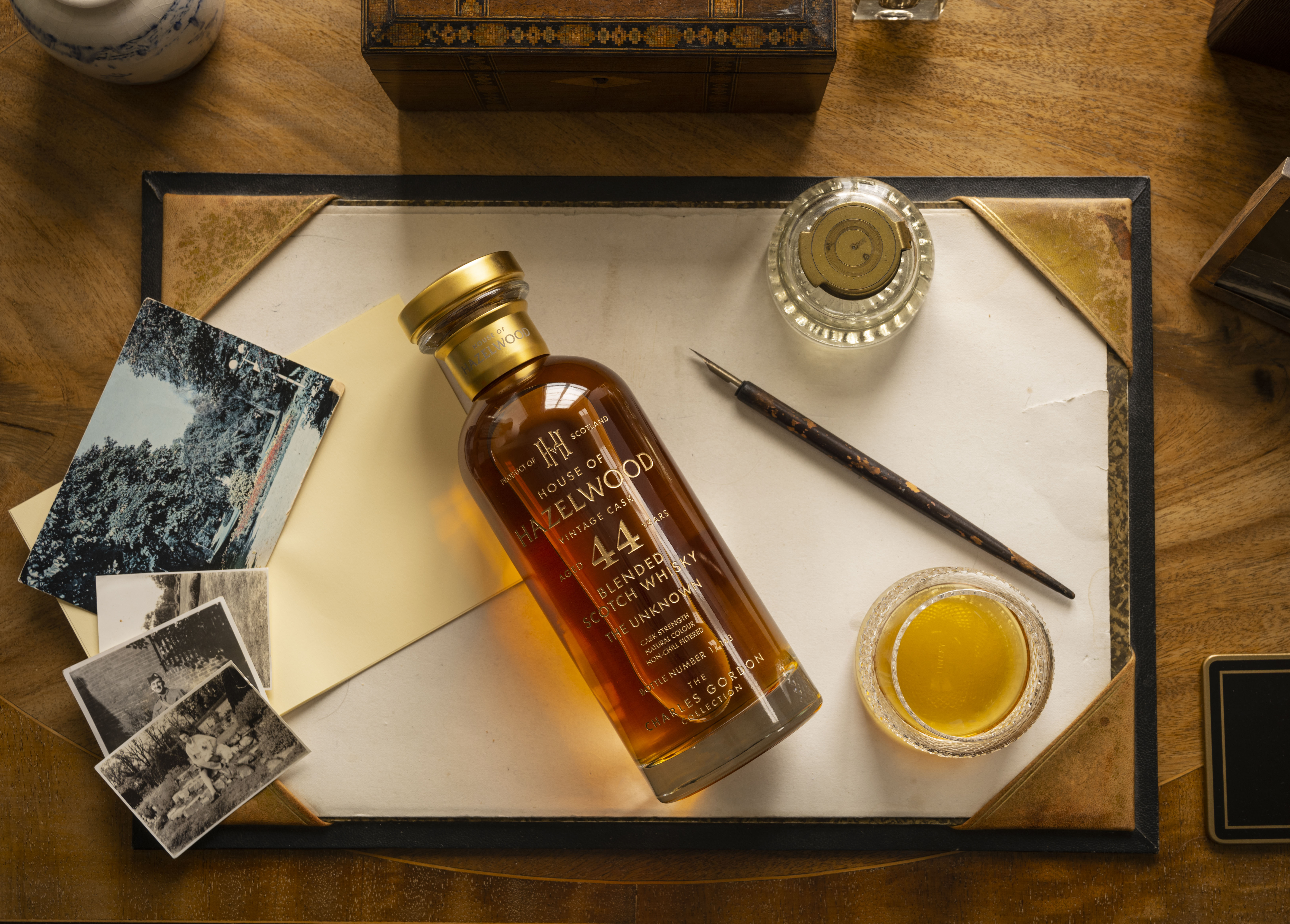
House of Hazelwood "The Unknown" Blended Scotch Whisky (43.3% ABV, 44yo, 1 of 143 bottles, Blended Scotch, Scotland, £3,000)
---------------------------------------------------------------------------------------------------------------------------------------------------------------------
Distilled in 1978 and blended in 1989, "The Unknown" underwent an extensive secondary maturation for a further 33 years in a single refill butt

Colour: Bright yellow-gold.

Nose: Fresh vanilla pods in a fruit salad - pear, peach, apple predominantly.

Palate: More vanilla - creamy, with the same fruit salad notes from the nose, adding in nectarine and some citrus. There's a light, delicate mouthfeel and an underlying sweetness you find with some old grain whiskies.

Finish: Medium to long in length, with vanilla-laced smooth oak notes.

Rating (on my very non-scientific scale): 91/100 (Martin).


House of Hazelwood "A Breath of Fresh Air" Blended Grain Whisky (46.4% ABV, 37yo, 1 of 417 bottles, Blended Grain, Scotland, £3,000)
---------------------------------------------------------------------------------------------------------------------------------------------------------------------

Colour: Morning sunrise golden

Nose: Strawberries, Butter Menthol lollies, creamed honey and an underlying butteriness.

Palate: Light, with the buttery notes continuing alongside some rum-like esthers, heather & honey.

Finish: Medium in length, with a sweet buttery shortbread note that gains some dryness towards the end.

Rating (on my very non-scientific scale): 90/100 (Martin). A delightful example of the unique characteristics old Grain whisky can produce.


House of Hazelwood whiskies are available now in UK and Australia, purchased directly from the official website, with further distribution to follow. The collection is expected to grow every 6-9 months (with another 8 bottles added), and we can't wait to see how the future releases shape up.

Cheers,
Martin.

Thanks to House of Hazelwood for the samples, and to Jonathan for his time.