Showing posts with label cask. Show all posts

Tuesday, 7 March 2023

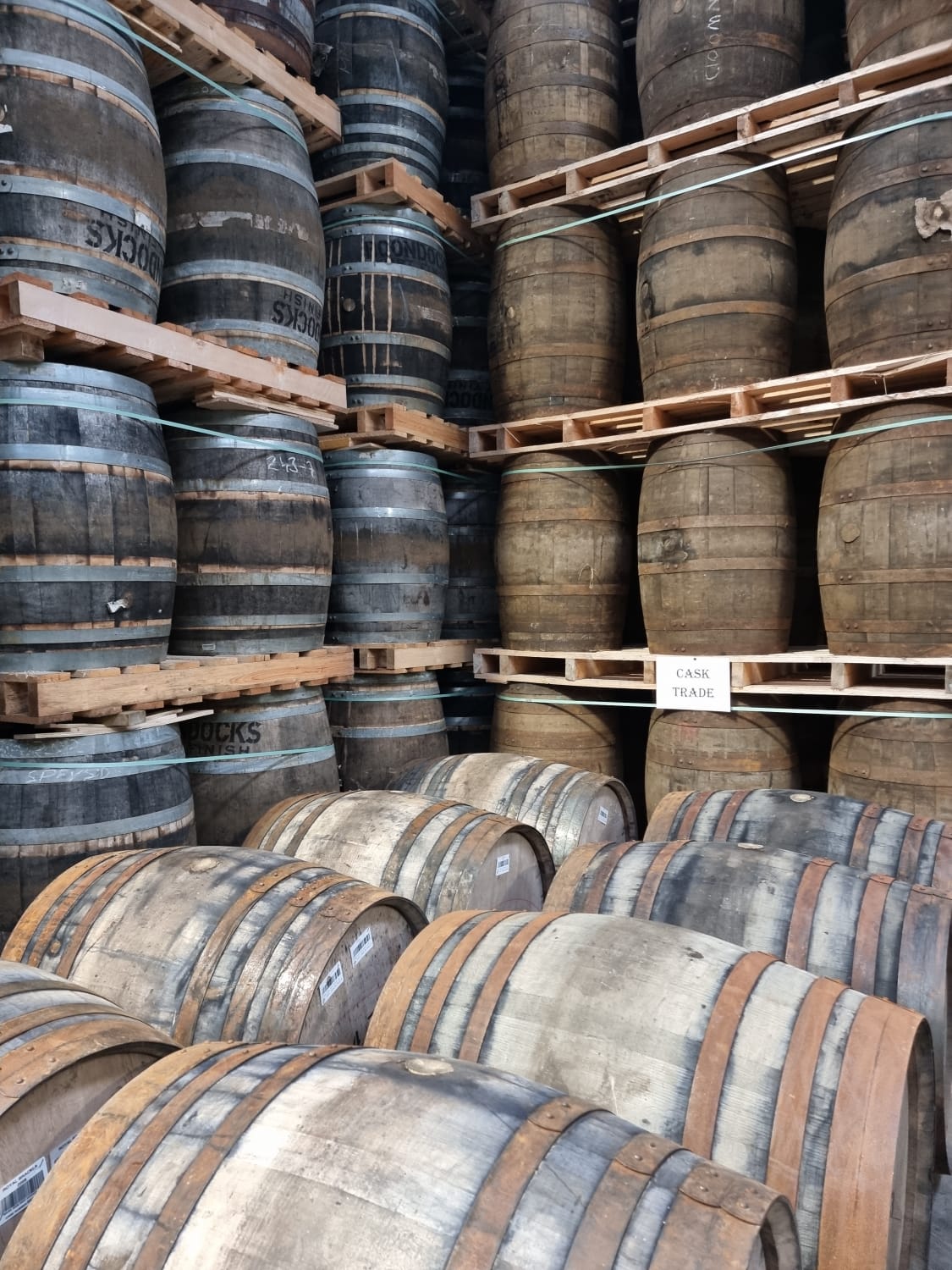
Cask Trade - A cask company with several points of difference

Please note - this article in no way constitutes or should be taken as financial advice. It simply contains my personal views on cask ownership (whether for the purposes of bottling or otherwise), and shares some information from Cask Trade. As always, do your own research and come to your own conclusions!

Last month I finally got around to writing up my long-held views on cask ownership, and it's fair to say the article generated a lot of attention - quickly becoming one of the most viewed articles in recent months, and kicking off weeks of discussion on Instagram and (interestingly) my personal Facebook. Seems there were even more people than I thought out there getting bombarded by cask ownership ads on social media, keen to separate fact from fiction.

In that article, I mentioned I'd be doing a few sponsored posts with a cask company, and I'm happy to announce that company is Cask Trade. In this article, I'll outline their approach, how I think it differs to others, and why I'm working with them.


First, some background. I first came to know Cask Trade back in early 2021, but I've known Colin Hampden White (Keeper of the Quaich, Chairman of the Circle of Wine & Spirits Writers, World Whisky Awards & IWSC Judge and Amazon Prime Star) since 2015. Learning that Colin was a Cask Trade Board member (and responsible for their cask picks) gave me some comfort that this wasn't like many of the other cask companies out there - that they actually had some industry expertise behind them. I later learned that John Wong (whom I'd known for years from Hong Kong's excellent whisky shop/bottler "The Good Spirits") was involved - now heading up HK operations, and after a Zoom tasting of cask samples back in 2021 with Colin, John and CEO Simon Aron, it seemed clear to me that this was a reputable company in a sea of sharks.

Apart from the fact that the cask samples I tasted during that session were all solid, I learnt a few facts about Cask Trade which also (to me) helped set them apart from many of the others. Specifically:

Cask Trade owns the stock they sell. This is a big one - Cask Trade is not a broker. Any cask sold by Cask Trade is, according to the company, 100% owned by them (and as above, with a good chance of being selected by Colin). Management, sampling, updates, cask regauge (health check) etc... are all handled / overseen by Cask Trade, which they can do easily, and as owners of the casks prior to sale, they're able to actually perform quality checks on the casks they're selling, and typically arrange a sample prior to sale too.


They're open about different options ("exit strategies") - including bottling: Many of the shadier companies make grandiose claims about financial returns and easy availability of buyers, without a lot of detail to back them up. Cask Trade offer clear steps and services for what to do when it's time to move on, including bottling the cask, selling it back to Cask Trade, selling it privately, and even auctioning it on their sister site AuctionYourCask.com, which gives you some real-world ideas of what the current values of casks (over £400,000 of casks are said to have been sold via the site).


They're based in the UK, and have a physical presence in Hong Kong. If you're a Hong Kong customer, you can actually speak to the team here in Hong Kong - and be assured you're receiving the same pricing as a customer in the UK (or anywhere else).

Their buy-back service seems to offer fair and realistic prices. One of the concerns I raised in my article was spurious / questionable claims of significant financial returns on casks from less sought-after distilleries. Cask Trade shared with me some of the returns their customers have received when using their "Buy Back" service, and whilst I won't re-publish them here, to me they seemed believable - e.g. I'm not surprised that someone who bought a well-aged Clynelish cask in 2019 and sold it in 2022 made a solid % return, whilst someone who bought a Teaninich cask and kept it around the same time made a less significant (but still very respectable) return. 


In the course of my regular whisky discussions (and especially since writing last month's article on cask ownership), I've come across Cask Trade customers and potential customers, and they've all had good things to say regarding their interaction. Part of that is likely because Cask Trade caters to all types of customers - even beginners, and their team offers advice which reflects actual knowledge of the whisky industry, and an understanding that different distilleries/cask types/ages yield different results.

Cask Trade don't publish a complete stock list on their website (which is understandable, given how quickly it would change), but according to their site they do "have the largest most varied cask whisky stocklist in the world [with].....over 500 casks featuring Scotch whisky from over 90 distilleries across Scotland, as well as Irish whiskey, New World whisky and rum, plus other spirits like Cognac and Armagnac." From viewing stock lists previously, I'd say that stacks up, with everything from younger (even new fill) casks from lesser-known distilleries, to well-matured casks from some of Scotland's most sought-after distilleries.


It should go without saying that when getting involved in any kind of cask purchase, it's critical to do your own research and make your own decisions - and to not take any of the above as financial advice. This is simply my experience with Cask Trade as a company, and the people (two of whom I knew well before their involvement) behind it.

Cheers,
Martin.

PS: Whilst I'm not currently a Cask Trade customer, I'm not a customer of any Cask company at the moment. The only casks I own / have owned are directly from distilleries, aged at those distilleries.

Tuesday, 31 January 2023

Cask ownership: A few thoughts...

For several years now, I've had questions from friends, colleagues, friends of friends etc.. about cask ownership. Every time, I give my thoughts and tell myself "I really should write a blog article about this", and then never do...

So finally, it's time to put all those thoughts into an article, which hopefully provides some points to think about when considering cask ownership. First though, a few admissions in the interests of transparency:
  • I own (and have owned) casks
  • I have bottled (and will bottle) my casks
  • I have a lot of whisky friends who bottle casks - some for fun, some as a business, and some in-between
  • I'll soon be doing a few (2-3) sponsored posts on the blog and socials (FB, IG) with a cask company - one of the very few cask companies (I can count them on one hand) that I actually trust

To begin, let's take it back to a few basics for those who may be completely new to the world of casks...


"What's all this about casks then?"
In simplest terms, "cask" refers to the wooden vessel in which many aged spirits (including all whiskies) are matured or aged. They come in different shapes, sizes, and have names like "Butts", "Hogsheads", "Barrels", "Octaves" etc.. but they're (almost) always made of Oak, and for the purposes of this article we'll refer to them generically as "casks".

Back in the 1980s, when non-aged spirits like Vodka were gaining in popularity, whisky - Scotch especially - took a backseat and the world experienced a Scotch whisky glut, referred to by some as a "Whisky Loch" (some of the distilleries which closed during this time are now amongst the world's most sought-after). To survive, several distilleries sold casks - to clubs, private individuals, and especially Independent Bottlers (of course some bottlers, like G&M had already been buying spirit and maturing their own casks for nearly 100 years by this stage).


Fast forward 25-30 years, and whisky started to gain in popularity in a big way. The Whisky Loch was no more and we started to experience the opposite - a shortage (especially of aged whisky), and inevitably rising prices. Despite this, at the time and even later (circa 2010-2015), there were still some excellent value casks around, and many distilleries still selling direct to the public. Nowadays there are only a handful doing so, and almost all of them are relatively young / new distilleries.

Fast forward a few more years, whisky continued to grow in popularity (especially during the pandemic - go figure) and unsurprisingly, amidst shortages and rising prices, the "cask investment" brigade emerged - companies taking advantage of the fervour around whisky, promising incredible financial returns in a short period of time.

(Out of sheer curiosity and to help guide some friends, I sat in on two presentations from one of these companies in 2021 & 2022. I won't name names, but my goodness - what I heard was enough to have me running for the hills. I'm not exaggerating when I say almost their entire business model could be summarised as "Buy this cask today, because in X months you can sell it to someone in Mainland China for a double-digit % profit". Never mind the fact that the company couldn't answer basic questions about cask ownership, and that the casks weren't from particularly good distilleries, weren't available for tasting, and/or were in my view horrendously over-priced...)


"I see ads all over social media offering me casks. Is this my ticket to an early retirement or a quick buck?"
Unlikely. Sure, people claim to have made very handsome short-term returns buying and selling casks in the past, but many (myself included) feel that ship has somewhat sailed, at least in terms of Scotch whisky. You may have a "whisky investment expert" quote you some incredible returns in the space of months, but is someone really going to pay 30-50% more than you paid for your cask of Glen Tartan (or other average distillery) in a short space of time? It's far from guaranteed.

Also, keep in mind it’s either impossible or very, very expensive to get a cask from a sought-after distillery like Macallan or Springbank these days (we’re talking hundreds of thousands, often millions of pounds / dollars for a well-matured cask, and forget getting a brand new fill - when it comes to private individuals, only the distillery’s very very best clients get that privilege, if at all).


"So what should I consider about cask ownership?"
First, think about your reason for cask ownership. Are you looking to make a quick buck (which, as above, isn't as easy as it sounds), long-term investment (which carries its own risks outlined below), or are you wanting to eventually bottle the whisky (and if so, to sell, gift or drink)?

Then think about why a cask is for sale in the first place. We've already established that whisky is popular these days, and that most distilleries aren't selling their casks (or at least, not on the open market) anymore. So when you see an aged cask for sale, think "why"? Is it a good cask? Maybe (certainly there are some AMAZING independently bottled casks out there), but think about it from a distiller’s perspective - are they going to sell their best casks? Probably not. They will however sometimes sell casks that don’t fit their flavour profile - which isn’t necessarily a bad thing and has produced some legendary bottles in the past. 

Or maybe it's a cask that's been traded several times, and is floating around the market. Why? Again, that's not automatically a problem, but it is something to ask / consider. 

If you can taste a recent sample, that can help allay concerns about the quality. Keep in mind whisky casks are unique. Two casks maturing side by side, filled on the same day, in the same type of wood, can taste completely different. One might be amazing, one might be terrible. If you’re not getting samples before buying, you have no guarantee if you’ll end up with an amazingly balanced whisky, or 200L+ of tannic sulphured oak juice.


Then let’s say your cask is good, AND you choose to bottle it at the right time (remember not every cask will make it to 25, 30, 40+ years old - some will be terrible at an older age, some won’t even be whisky if the ABV drops too low)! Then you have 200, 350, 450L of whisky...that’s a lot of bottles. You then have to pay for the glass bottles, label design, labelling, taxes, packaging, and storage / shipping. Certainly some (better) cask companies help with all this, but it can be an expensive exercise. Note this isn't a reason not to buy a cask, but it is something a lot of people don't consider.

(Some distilleries, like Sydney's Archie Rose offer "turn-key" cask ownership, where you pay one up-front fee and eventually end up with labelled, duty-paid, delivered bottles. I've done this, and can recommend it as a hugely fun exercise, but of course you pay more up-front for the privilege.)

OK, so you've bottled your cask. Then what do you do with 200, 300, 400+ bottles of your whisky? If you're looking to share it with friends, gift it, or just drink it yourself - great! If you're hoping to sell it though, that’s a lot of whisky to sell in a crowded market. What if it’s just average? Or not even good? It's probably not from a top-tier distillery, so that leaves the less popular distilleries, which is fine, but again, not easy to sell hundreds of bottles unless you’re an established bottler or bar with a following already. Certainly some well-respected bars, shops and whisky clubs can sell bottles in minutes, even from "lesser" distilleries, but who wants to buy an unknown bottle from Joe Smith? 


Also consider the outturn - you may expect to get 300 bottles, but may only end up with 220. That suddenly raises the cost of each bottle significantly. Evaporation can vary wildly from cask to cask, and can hit in a short space of time (and that’s before we consider leakage).

This is all assuming you bottle it. If you’re just looking to sell the cask to someone, it removes some of these headaches, but will someone buy it? For the price and in the timeframe you expect? Maybe, but it's not always guaranteed. 

(There's also a whole minefield around cask ownership which I won't go into in detail, but suffice to say, if you're buying a cask, make sure you're getting the appropriate paperwork to confirm that you indeed own the cask. A "Certificate of Title" or similar may not be enough, and may leave you exposed in the event that your cask broker / "investment company" goes out of business.)


"Any final thoughts?"
Don’t get me wrong, cask ownership can be a tonne of fun, but you have to ask what your goal is up-front, and consider the above points (and many others - this article is far from comprehensive).

If you're planning to buy a cask or two as a long-term investment, cool good luck - but consider the above points first.

If you're planning to pump all your savings into casks and hope to double it within the space of a year...maybe reset your expectations.

If you’re buying a cask to share with friends or colleagues, or as part of a group, and your goal is to have some of your own whisky at the end, or perhaps gift it, go for it! That's my plan with my casks, and it's a lot of fun. 


Cheers,
Martin.

Please note - this article in no way constitutes or should be taken as financial advice. It simply contains my personal views on cask ownership (whether for the purposes of bottling or otherwise). As always, do your own research and come to your own conclusions.